

Introduction
Carnivorous plants are some of nature’s most intriguing and deceptive creations. Unlike most plants that rely solely on sunlight, water, and soil nutrients, these botanical predators have evolved to capture and digest insects and even small animals to supplement their diet. From the iconic Venus flytrap to the elegant pitcher plant, carnivorous plants have developed extraordinary trapping mechanisms that fascinate scientists and plant enthusiasts alike.
In this article, we’ll explore the different types of carnivorous plants, how they lure and trap their prey, their unique adaptations, and where they can be found in the wild. Whether you’re a curious beginner or a seasoned botanist, this deep dive into the world of flesh-eating flora will leave you amazed!
Why Do Some Plants Eat Meat?
Most plants absorb nutrients from the soil, but carnivorous plants often grow in nutrient-poor environments like bogs, swamps, and rocky terrains. To survive, they’ve evolved to extract essential nutrients—such as nitrogen, phosphorus, and potassium—from their prey.
Key Adaptations of Carnivorous Plants:
-
Specialized leaves that function as traps
-
Sticky surfaces, snap mechanisms, or pitfall traps to capture prey
-
Digestive enzymes or symbiotic bacteria to break down prey
-
Bright colors and sweet nectar to attract insects
Now, let’s explore the different types of traps these plants use.
5 Types of Carnivorous Plants & Their Trapping Mechanisms
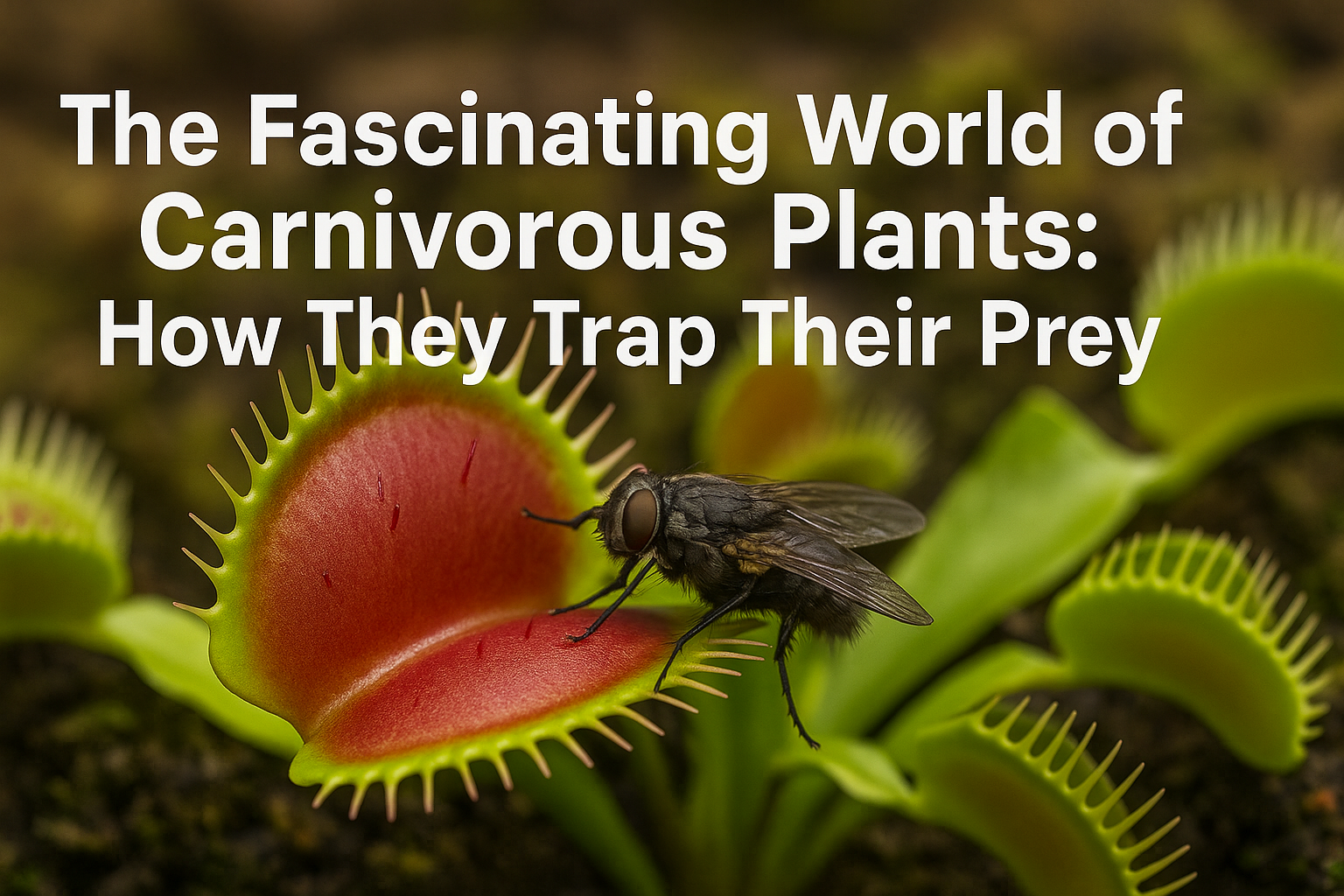
1. Snap Traps (Venus Flytrap – Dionaea muscipula)
The Venus flytrap is the most famous carnivorous plant, known for its rapid snapping motion.
How It Works:
-
The leaves have trigger hairs inside.
-
When an insect touches two hairs within 20 seconds, the trap snaps shut.
-
The plant secretes digestive enzymes to dissolve the prey.
Fun Fact: The trap only closes if the movement suggests live prey, preventing false triggers from raindrops or debris.
2. Pitfall Traps (Pitcher Plants – Nepenthes, Sarracenia)
Pitcher plants use deep, fluid-filled cavities to drown their prey.
How It Works:
-
The plant produces nectar to lure insects.
-
Slippery walls and downward-pointing hairs prevent escape.
-
Digestive enzymes or bacteria break down the trapped prey.
Notable Species:
-
Nepenthes rajah – Can trap small rodents!
-
Sarracenia purpurea – Uses rainwater to drown insects.
3. Sticky or Flypaper Traps (Sundews – Drosera)
Sundews have glandular tentacles covered in sticky mucilage.
How It Works:
-
Insects get stuck on the glue-like droplets.
-
The tentacles slowly curl around the prey.
-
Enzymes digest the insect over hours or days.
Bonus: Some sundews can move their tentacles at surprising speeds!
4. Suction Traps (Bladderworts – Utricularia)
Bladderworts are aquatic carnivorous plants with tiny bladder-like traps.
How It Works:
-
The bladders create a vacuum seal.
-
When prey touches trigger hairs, the bladder sucks them in instantly.
-
Digestion occurs within the closed trap.
Amazing Fact: This is one of the fastest plant movements in nature—trapping prey in less than a millisecond!
5. Lobster-Pot Traps (Corkscrew Plants – Genlisea)
These plants have underground spiral traps to catch microscopic organisms.
How It Works:
-
Tiny hairs guide prey into twisted chambers.
-
One-way barriers prevent escape.
-
Digestive enzymes break down the prey inside.
Unique Feature: Unlike other carnivorous plants, Genlisea primarily feeds on protozoa and soil microbes.
Where Do Carnivorous Plants Grow?
Carnivorous plants thrive in low-nutrient environments, including:
-
Bogs & Wetlands (Venus flytraps, sundews)
-
Tropical Rainforests (Nepenthes pitcher plants)
-
Sandy or Rocky Areas (Butterworts, bladderworts)
-
Acidic Lakes & Ponds (Aquatic bladderworts)
Conservation Status: Many carnivorous plants are endangered due to habitat destruction and illegal poaching.
Can You Grow Carnivorous Plants at Home?
Yes! Here’s a quick care guide:
Essential Tips:
✔ Use distilled or rainwater (tap water contains harmful minerals).
✔ Plant in nutrient-free soil (peat moss + perlite mix works well).
✔ Provide bright, indirect sunlight (or artificial grow lights).
✔ Keep them humid (a terrarium or tray of water helps).
✔ Avoid feeding them meat (they catch their own prey naturally).
Beginner-Friendly Species:
-
Venus flytrap (Dionaea muscipula)
-
Cape sundew (Drosera capensis)
-
Purple pitcher plant (Sarracenia purpurea)
Conclusion: Why Carnivorous Plants Are So Fascinating
Carnivorous plants showcase nature’s incredible adaptability and evolutionary creativity. From lightning-fast traps to deadly pitfall designs, these plants prove that the natural world is full of surprises.
Whether you’re a gardener looking to grow them at home or simply a nature enthusiast, understanding these botanical predators offers a glimpse into one of the most unique survival strategies in the plant kingdom.
Want to Learn More?
-
Visit a botanical garden with a carnivorous plant exhibit.
-
Join online forums like The Carnivorous Plant Society.
-
Read books like “Savage Garden” by Peter D’Amato for expert growing tips.
By sharing this article, you help spread awareness about these remarkable and often endangered plants—so let’s keep the fascination growing!

Leave a Comment