
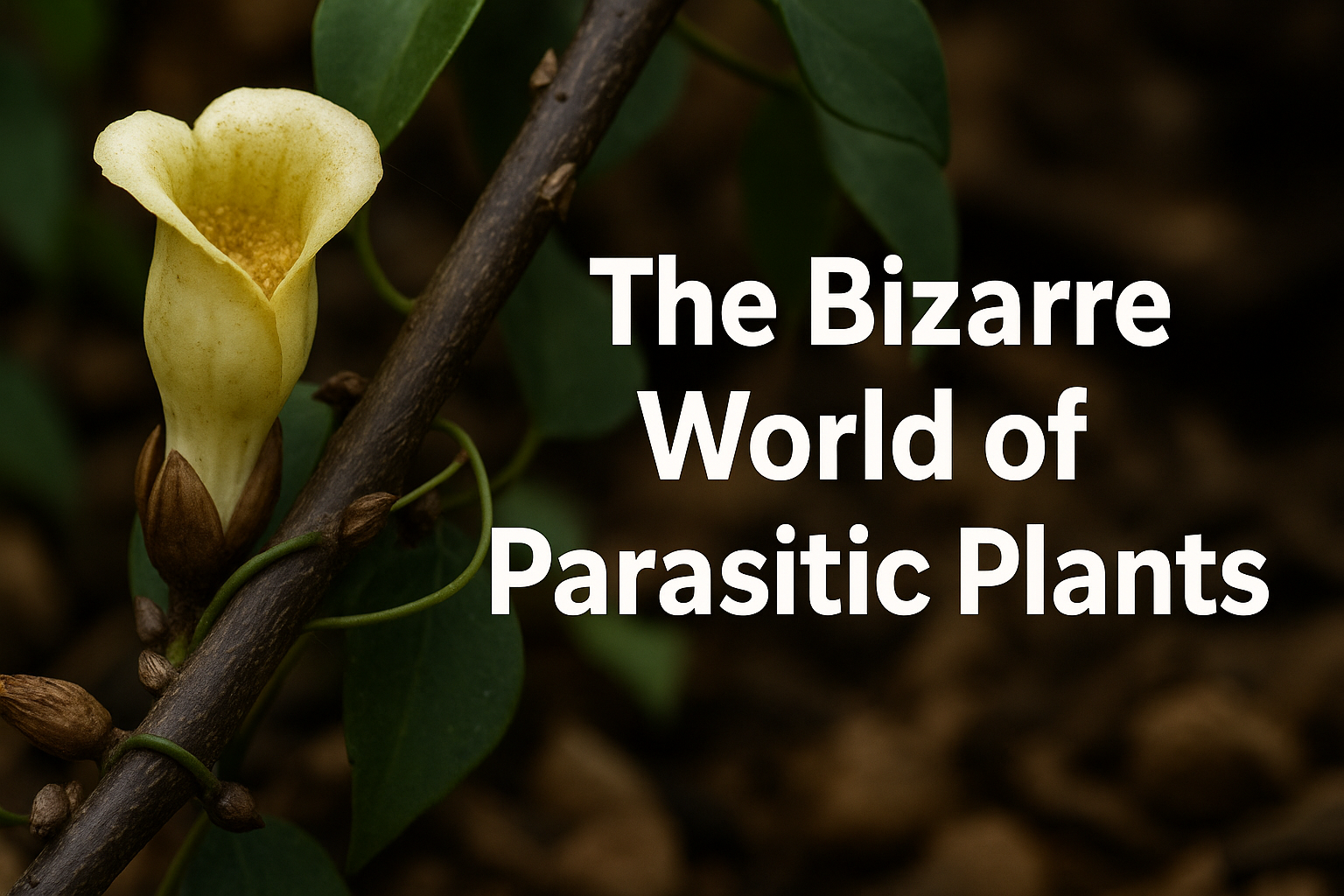

While most plants rely on sunlight and soil, a strange group of botanical rebels has evolved to steal nutrients from other organisms—living as thieves, killers, and even zombie-makers. From vampiric vines to fungus-controlling puppeteers, parasitic plants have developed some of nature’s most unsettling survival strategies.
This article uncovers:
-
The different types of plant parasites (full parasites, hemiparasites, and holoparasites)
-
Horror-movie adaptations (sucking roots, chemical warfare, and host mimicry)
-
The world’s strangest parasitic plants (corpse flowers, zombie-makers, and underground monsters)
-
How they impact ecosystems—and even human medicine
1. Parasitic Plants 101: How They Survive Without Photosynthesis
Most plants are autotrophs (they make their own food via photosynthesis). Parasitic plants, however, are heterotrophs—they steal nutrients from other plants or fungi.
Types of Plant Parasites:
| Type | Description | Example |
|---|---|---|
| Hemiparasites | Partially parasitic (can photosynthesize) | Mistletoe |
| Holoparasites | Fully parasitic (no chlorophyll) | Corpse Flower (Rafflesia) |
| Mycoheterotrophs | Steals from fungi, not plants | Ghost Pipe (Monotropa) |
Key Adaptation: Haustorium—a specialized root that penetrates host plants to suck out nutrients.
2. The Most Bizarre Parasitic Plants on Earth
A. The Corpse Flower (Rafflesia arnoldii)
-
Where: Southeast Asia
-
Horror Factor: The world’s largest flower (3 feet wide) smells like rotting flesh to attract flies.
-
Parasitic Trick: Has no leaves or stems—just a hidden vine that drains nutrients from jungle roots.
B. The Vampire Vine (Dodder – Cuscuta spp.)
-
Where: Worldwide
-
Horror Factor: A sentient-seeming parasite that “sniffs out” victims, then strangles them.
-
Parasitic Trick: Uses chemical cues to locate hosts, then replaces its own roots with sucking tendrils.
C. The Zombie-Maker (Indian Paintbrush – Castilleja spp.)
-
Where: Americas
-
Horror Factor: Secretes toxins that alter host plant growth, forcing it to produce more nutrients.
-
Parasitic Trick: “Brainwashes” nearby plants into becoming better food sources.
D. The Underground Monster (Hydnora africana)
-
Where: Africa
-
Horror Factor: A fleshy, mouth-like flower that grows entirely underground, luring beetles with a foul stench.
-
Parasitic Trick: Feeds on roots of desert shrubs, only emerging to bloom.
3. Parasitic Plants vs. Their Hosts: An Evolutionary Arms Race
Host plants aren’t defenseless—many fight back:
✔ Chemical warfare – Some hosts release toxins to repel invaders.
✔ Structural defenses – Thick bark or resin blocks haustoria penetration.
But parasites counterattack with:
-
Host mimicry – Some parasites match host root chemistry to avoid detection.
-
Rapid mutation – Dodder evolves quickly to overcome host resistance.
4. Are Parasitic Plants Evil? Their Role in Ecosystems
Despite their creepy reputations, parasitic plants play crucial ecological roles:
✔ Biodiversity support – Mistletoe provides nesting sites for birds.
✔ Nutrient cycling – Some redistribute minerals from deep-rooted hosts to surface soil.
✔ Keystone species – In grasslands, parasites prevent dominant plants from monopolizing resources.
Exception: Invasive parasites (like witchweed) can devastate crops, causing billions in agricultural losses.
5. Parasitic Plants in Medicine and Culture
A. Ancient Remedies
-
Mistletoe (Viscum album) – Used in traditional cancer treatments (though modern efficacy is debated).
-
Eyebright (Euphrasia) – Hemiparasite historically used for eye infections.
B. Myth and Legend
-
European folklore claimed dodder was “witches’ hair” used in curses.
-
Native American tribes used paintbrush flowers in spiritual rituals.
6. How to Spot (or Grow) Parasitic Plants
Caution: Many parasitic plants are endangered—never wild-collect. Instead:
-
Look for:
-
Dodder – Golden threads on garden plants.
-
Ghost pipes – Pale white stems in dark forests.
-
-
Grow ethically: Some nurseries sell mistletoe seeds for controlled cultivation.
Conclusion: Nature’s Most Macabre Masterpieces
Parasitic plants blur the line between botany and horror, proving evolution’s endless creativity. By studying them, we uncover:
✔ New medical compounds (from their unique biochemistry).
✔ Better pest control (by mimicking their host-targeting tricks).
✔ Deepened ecological understanding of interdependence.
Next time you see mistletoe in a tree, remember—you’re witnessing a silent, centuries-old heist in progress.


Leave a Comment