
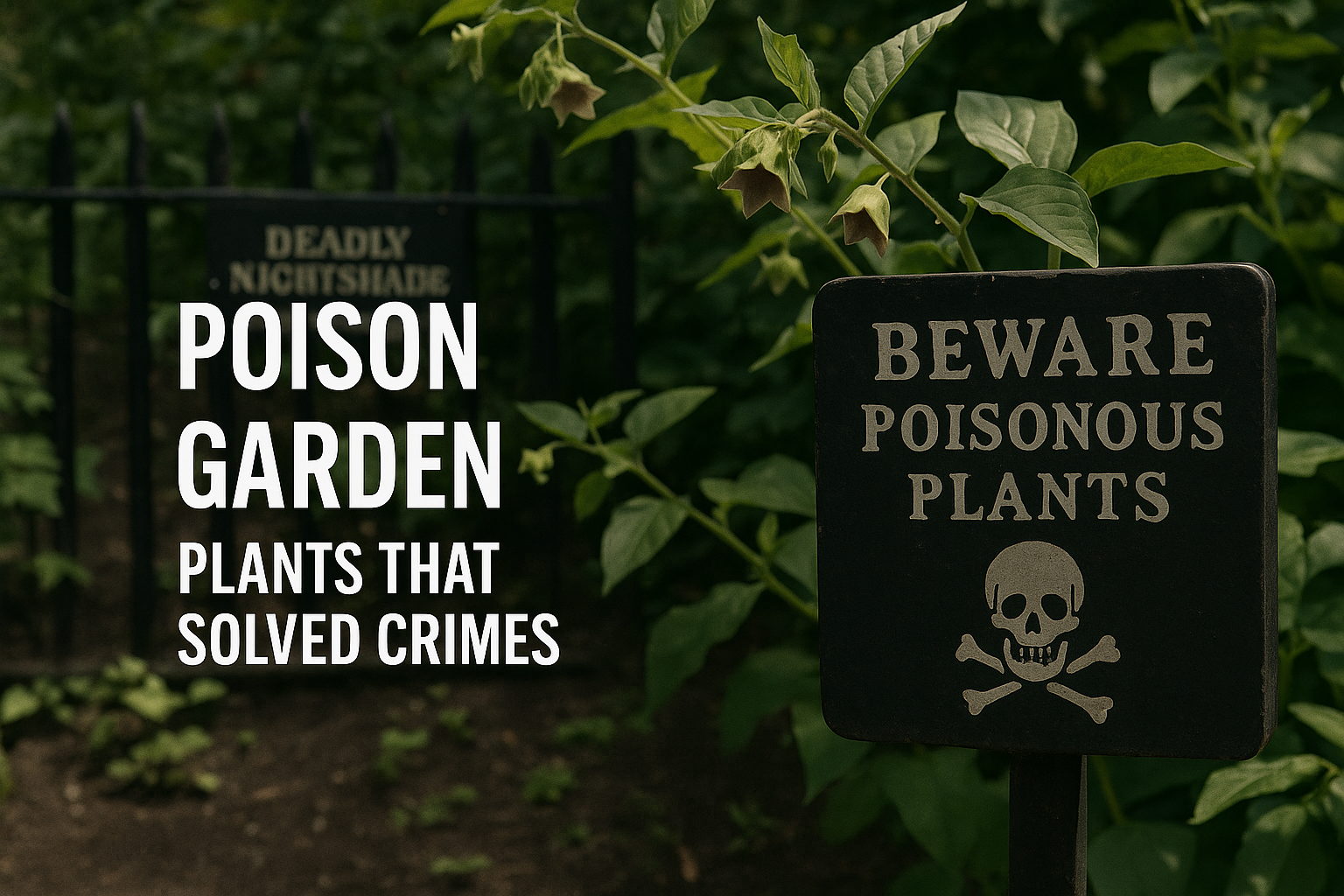

Throughout history, poisonous plants have been both deadly weapons and silent witnesses in criminal investigations. From ancient assassinations to modern forensic breakthroughs, toxic botanicals have played a crucial role in solving crimes.
In this article, we’ll explore the most infamous poison garden plants used in murders, how they were detected, and the forensic science that uncovered the truth. Whether you’re a true crime enthusiast, a gardener, or a history buff, these lethal plants reveal a chilling intersection of nature and criminal justice.
1. The Deadly Nightshade (Atropa belladonna) – The Assassin’s Favorite
Toxin: Atropine and scopolamine
Famous Case: The Borgia Family (15th-16th Century)
How It Kills:
-
Causes hallucinations, paralysis, and fatal heart arrhythmias.
-
Just 2-5 berries can kill an adult.
Crime-Solving Moment:
The Borgias, a powerful Renaissance family, allegedly used belladonna-laced wine to eliminate rivals. Forensic historians analyzed old texts and suspect symptoms (dilated pupils, convulsions) to link deaths to this plant.
2. Hemlock (Conium maculatum) – The Philosopher’s Poison
Toxin: Coniine
Famous Case: Execution of Socrates (399 BCE)
How It Kills:
-
Paralysis starts in the legs, moves upward, and stops breathing.
-
Victims remain fully conscious until death.
Crime-Solving Moment:
Ancient accounts describe Socrates’ death in detail—slurred speech, muscle weakness, and gradual suffocation—classic hemlock poisoning. Modern toxicologists confirmed this using historical records.
3. Foxglove (Digitalis purpurea) – The Heart-Stopping Bloom
Toxin: Digoxin
Famous Case: The “Black Widow” Murder (1800s)
How It Kills:
-
Overdose causes nausea, vomiting, and fatal heart failure.
-
Used in medicine (heart medication) but deadly in excess.
Crime-Solving Moment:
In the 19th century, a woman named Mary Cotton allegedly killed multiple husbands with foxglove tea. Autopsies revealed digoxin traces, leading to her conviction.
4. Oleander (Nerium oleander) – The Beautiful Killer
Toxin: Oleandrin
Famous Case: The 2002 Chicago Poisonings
How It Kills:
-
Disrupts heart rhythm, leading to cardiac arrest.
-
Every part of the plant is toxic, even when dried.
Crime-Solving Moment:
A woman laced her husband’s food with oleander leaves. Detectives found shredded leaves in the trash, and lab tests confirmed oleandrin in his blood.
5. Castor Bean (Ricinus communis) – The Lethal Dose
Toxin: Ricin
Famous Case: Georgi Markov Assassination (1978)
How It Kills:
-
One milligram of ricin can kill an adult.
-
Causes organ failure within days.
Crime-Solving Moment:
Bulgarian dissident Georgi Markov was assassinated via a ricin-filled pellet shot from an umbrella. Forensic experts identified ricin poisoning through tissue analysis.
6. Monkshood (Aconitum napellus) – The Queen of Poisons
Toxin: Aconitine
Famous Case: The 2009 Canadian Murder
How It Kills:
-
Causes numbness, vomiting, and fatal heart failure.
-
Just 2mg of aconitine is deadly.
Crime-Solving Moment:
A woman in Canada poisoned her ex-lover with monkshood-laced food. Investigators found plant residue in his stomach, leading to her arrest.
7. Water Hemlock (Cicuta spp.) – The Most Violent Plant Poison
Toxin: Cicutoxin
Famous Case: The 1992 Oregon Hiker Death
How It Kills:
-
Triggers violent seizures and respiratory collapse.
-
Often mistaken for edible plants like wild parsnip.
Crime-Solving Moment:
A hiker died after eating what he thought was wild celery. Botanists identified water hemlock fragments in his stomach, solving the accidental poisoning.
8. Yew (Taxus baccata) – The Slow-Acting Killer
Toxin: Taxine
Famous Case: The 2013 UK Murder-Suicide
How It Kills:
-
Causes cardiac arrest with no immediate symptoms.
-
Poisoning can take hours to days to be fatal.
Crime-Solving Moment:
A man poisoned his wife with yew berry tea, then killed himself. Forensic botanists detected taxine in her bloodstream during autopsy.
How Forensic Botanists Solve Poison Crimes
Modern forensic science uses toxicology, plant DNA, and chemical analysis to detect plant-based poisons. Key techniques include:
-
HPLC (High-Performance Liquid Chromatography) – Isolates plant toxins in blood.
-
Mass Spectrometry – Identifies molecular structures of poisons.
-
Microscopic Botany – Examines plant fragments in stomach contents.
Famous Forensic Botanist Cases:
-
Dr. Jane Bock – Solved a murder by identifying mistletoe berries in a victim’s stomach.
-
Dr. David Hall – Linked oleander poisoning to a serial killer in Texas.
Conclusion: The Dark Power of Poison Plants
From ancient Rome to modern forensics, poisonous plants have been both murder weapons and key evidence in solving crimes. Advances in forensic botany now allow investigators to trace even the most elusive plant toxins, ensuring justice for victims.
Final Thought:
Next time you walk through a garden, remember—some of the most beautiful plants hide dead


Leave a Comment