
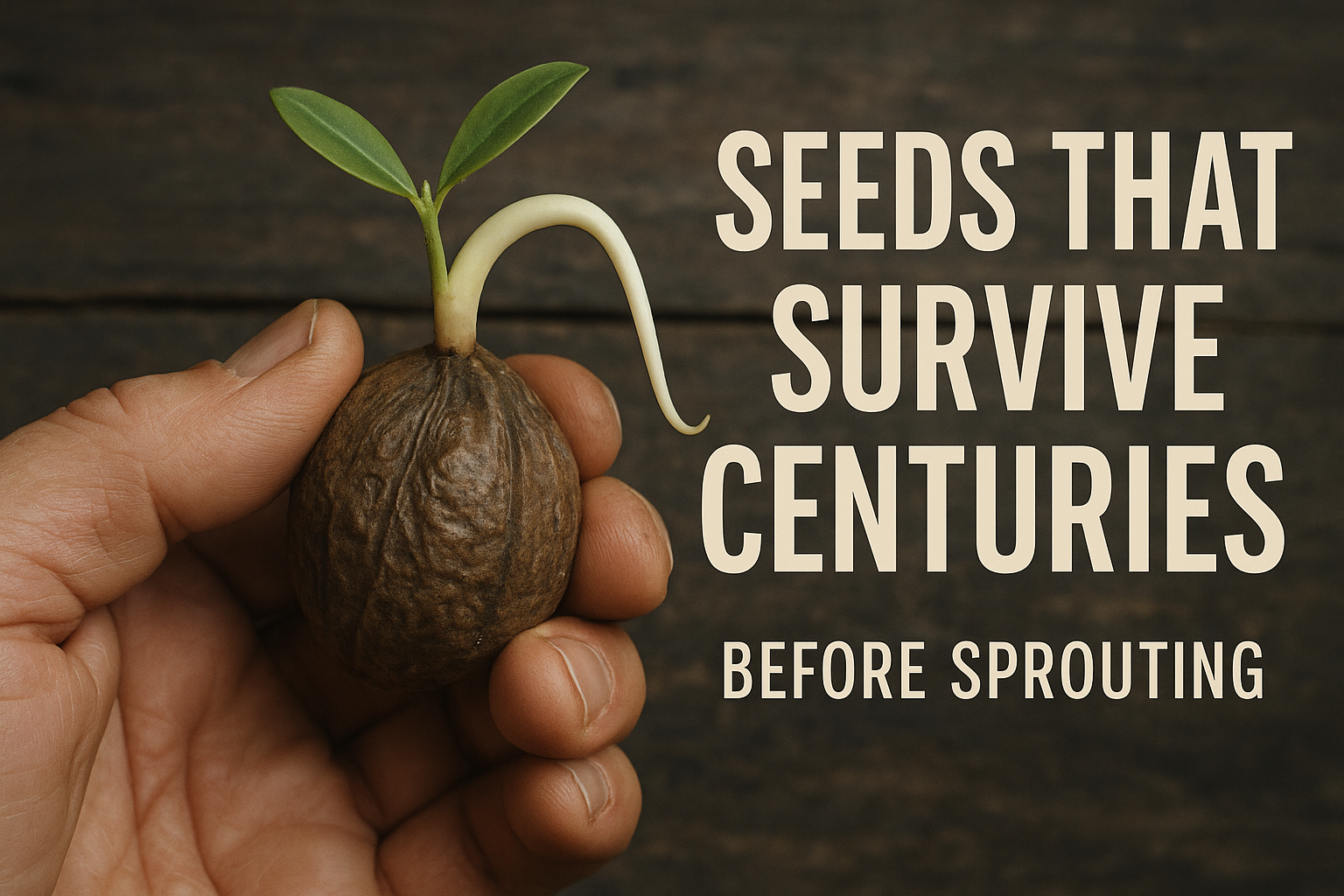

Deep in the soil, seeds lie dormant for decades—even millennia—waiting for the perfect moment to awaken. These botanical time capsules defy decay, resisting drought, fire, and ice until conditions align for rebirth. Scientists have discovered seeds that germinate after 2,000 years, challenging our understanding of life and longevity.
This article explores:
-
The oldest seeds ever revived (including a 32,000-year-old record-holder)
-
How seeds survive centuries—biological tricks and protective adaptations
-
Real-world “resurrection plants” that return from the dead
-
What this means for climate change, agriculture, and even space colonization
1. The Methuselahs of the Plant World
A. The 32,000-Year-Old Champion: Silene stenophylla
-
Discovery: Buried by Arctic squirrels in Siberia’s permafrost.
-
Revival: Russian scientists grew it from frozen placental tissue in 2012.
-
Implication: Proves long-term DNA survival in ice.
B. The Sacred Lotus (Nelumbo nucifera): 1,300-Year-Old Sprout
-
Found: In a dry lakebed in China.
-
Significance: Its super-repair enzymes fix millennia of cellular damage.
C. Judean Date Palm: A 2,000-Year Comeback
-
From: Ancient seeds found at Masada fortress (Israel).
-
Result: “Methuselah,” a male palm grown in 2005, now produces pollen.
2. How Seeds Cheat Death: 4 Survival Strategies
A. The “Glass State” (Anhydrobiosis)
-
Mechanism: Some seeds remove 99% of their water, entering suspended animation.
-
Example: Craterostigma plantagineum (Africa’s resurrection plant) revives after 40 years dry.
B. Armor-Plated Protection
-
Tools:
-
Lignin-rich coats (e.g., cassia seeds resist microbial decay).
-
Chemical inhibitors that block germination until rains wash them away.
-
C. Deep Burial Time Capsules
-
Why It Works: Cold, low-oxygen environments (like bogs or permafrost) pause metabolism.
-
Case Study: Arctic lupine seeds sprouted after 10,000 years in lemming burrows.
D. Fire Activation
-
Adaptation: Serotiny—seeds sealed in resin (e.g., banksias) only open after wildfires.
3. Modern “Seed Banks” vs. Nature’s Longevity
| Comparison | Natural Seed Survival | Human Seed Banks (e.g., Svalbard) |
|---|---|---|
| Duration | Up to 32,000 years (observed) | Goal: 100+ years (controlled) |
| Storage Method | Permafrost, dry caves | -18°C, vacuum-sealed |
| Risks | Climate change thawing | Power failures |
Irony: Some wild seeds outlast banked ones—a 200-year-old Verbascum blattaria seed from an herbarium sprouted spontaneously.
4. Why This Matters: Climate Change to Space Farming
A. Rewilding Lost Species
-
Project: Using ancient seeds to restore extinct plants (e.g., Silphium, a Roman-era herb).
B. Climate-Proof Crops
-
Research: Cross-breading modern wheat with drought-resistant ancient strains.
C. Interstellar Agriculture
-
NASA Studies: Could space-traveling seeds colonize Mars? Dormancy genes are key.
5. How to Grow Ancient Seeds at Home (Ethically)
Note: Never excavate archaeological seeds—use ethically sourced alternatives:
-
Sacred lotus (commercially available ancient varieties).
-
Date palms (from reputable nurseries like Medjool).
-
Methuselah garlic (cultivated from 4,000-year-old Central Asian stock).
Conclusion: Seeds as Life’s Ultimate Survivors
These dormant time travelers prove life’s resilience—and may hold keys to food security, ecosystem restoration, and even interplanetary colonization. Next time you plant a seed, remember: it could outlive you by centuries.


Leave a Comment