
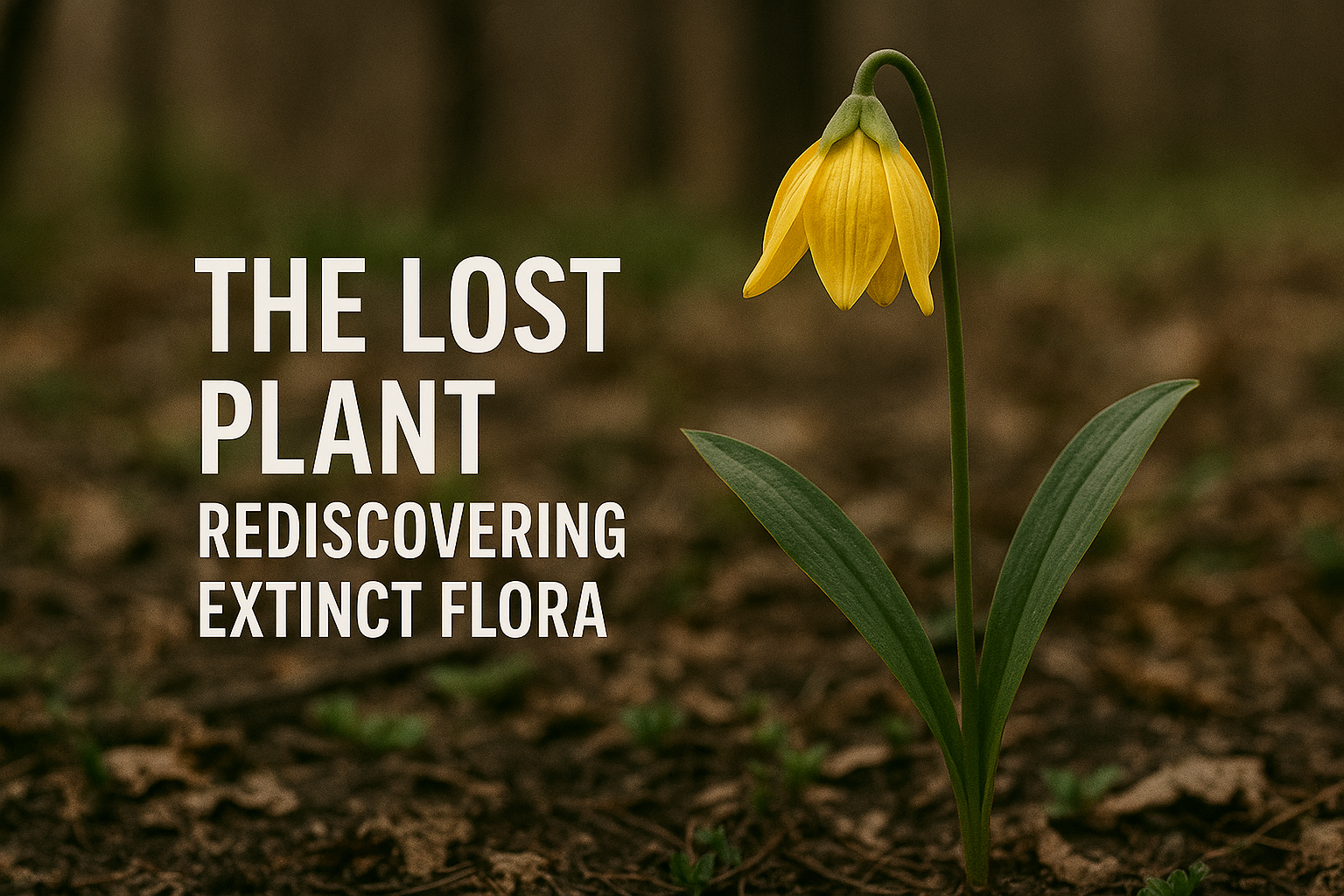

For centuries, scientists believed certain plants had vanished forever—lost to deforestation, climate shifts, or human activity. Yet in a twist of botanical fate, dozens of “extinct” species have been rediscovered, emerging from remote jungles, hidden valleys, and even urban backyards. These Lazarus plants, back from the dead, are rewriting conservation science and offering hope for biodiversity recovery.
From a Jurassic-era fern found clinging to a waterfall to a vanished Victorian orchid thriving on a London rooftop, this article uncovers the most astonishing plant rediscoveries, the technologies making them possible, and why these second chances matter in our race against extinction.
How Do Plants Go “Extinct”—and Return?
The Path to Presumed Extinction
-
Habitat destruction (85% of cases)
-
Invasive species competition
-
Over-collection (rare orchids, medicinal plants)
-
Climate shifts outpacing adaptation
Why Rediscoveries Happen
-
Remote refuges – Undisturbed microclimates
-
Seed banks – Dormant for centuries
-
Misidentification – Previously confused with other species
-
New tech – DNA barcoding, drone surveys
10 Astonishing Rediscovered Plants
| Plant | Years “Extinct” | Rediscovery Site | Significance |
|---|---|---|---|
| Silphium (Ancient Roman contraceptive) | 2,000 | Suspected in Turkish mountains | Classical history mystery solved |
| Hibiscadelphus woodii (Hawaii) | 10 | Kauai cliffside | Only 4 plants exist |
| Franklinia alatamaha (USA) | 100+ | Cultivated gardens | Extinct in wild since 1803 |
| Cyanea dunbariae (Hawaii) | 100 | Molokai rainforest | Bird-pollinated, thought eaten by rats |
| Thismia neptunis (Fairy lantern) | 151 | Malaysian Borneo | Looks like alien sea creature |
| Nepenthes mollis (Pitcher plant) | 100 | Indonesian cloud forest | Carnivorous plant revival |
| Dendroseris neriifolia (Chile) | 100 | Robinson Crusoe Island | “Living fossil” tree |
| Adenia firingalavensis (Madagascar) | 100 | Limestone karst | Survived in single cave |
| Gasteranthus extinctus (Ecuador) | 36 | Andes foothills | Named before being found |
| Lachanodes arborea (St Helena) | 200 | Island cliffs | Darwin studied its fossils |
Case Study: Silphium – The Ancient Herb That (Maybe) Returned
Historical Importance
-
Used as birth control by Greeks/Romans
-
Worth its weight in silver coins
-
Driven extinct by overharvesting circa 200 CE
2022 Rediscovery Clues
-
Potential survivor plants found in Turkish mountains
-
Matching descriptions from Dioscorides’ texts
-
Chemical analysis of resin compounds underway
The Role of Technology in Rediscoveries
1. Environmental DNA (eDNA)
-
Detects plant traces in soil/water samples
-
Led to rediscovery of New Zealand’s “extinct” mistletoe
2. Citizen Science Apps
-
iNaturalist users found:
-
Hibiscadelphus stellatus (Hawaii)
-
Acanthophoenix rubra (Mauritius)
-
3. Lidar Scanning
-
Revealed undocumented tree ferns in Laos canopies
4. Seed Bank Miracles
-
32,000-year-old Silene stenophylla regenerated from Arctic permafrost
Why Rediscoveries Matter Beyond Science
1. Medical Breakthroughs
-
Anti-cancer compounds in rediscovered Madagascar periwinkle
-
Franklinia contains novel disease-resistant genes
2. Climate Resilience
-
Drought-adapted “ghost species” may help crops survive
3. Cultural Revival
-
Hawaiian kāhili flower restored to lei-making traditions
4. Conservation Funding
-
Rediscoveries boost ecotourism (e.g., Rwanda’s giant lobelia)
The Dark Side of Rediscovery
1. “Conservation Paradox”
-
Publicity leads to poaching (e.g., Vietnamese golden orchid)
2. Last-Chance Ecosystems
-
86% of rediscovered plants remain critically endangered
3. False Hope Risk
-
Some species survive only in artificial cultivation
How You Can Help Find Lost Plants
1. Join Expeditions
-
Organizations like Global Tree Search need volunteers
2. Grow Rediscovered Species
-
Franklinia thrives in home gardens
3. Support Seed Banks
-
Millennium Seed Bank preserves 2.4 billion seeds
4. Document Unknown Plants
-
Upload suspicious finds to iNaturalist/Pl@ntNet
The Future: De-Extinction Possibilities
1. Resurrection Biology
-
CRISPR edits to revive Toromiro tree from 1800s specimens
2. Pleistocene Park Experiments
-
Could Arctic seed banks regrow ice-age flora?
3. Digital Herbaria
-
AI cross-referencing 19th-century sketches with drone imagery
Conclusion: A Race Against Time
Each rediscovery proves nature’s tenacity—but also highlights how much we’ve lost. Of the 1,200+ plants once declared extinct, only 430 have been found again. With 30-50% of all plants threatened this century, these second chances are both inspiration and urgent warning.
Whether through high-tech searches or backyard botany, the hunt for lost flora reminds us: extinction isn’t always forever.


Leave a Comment