
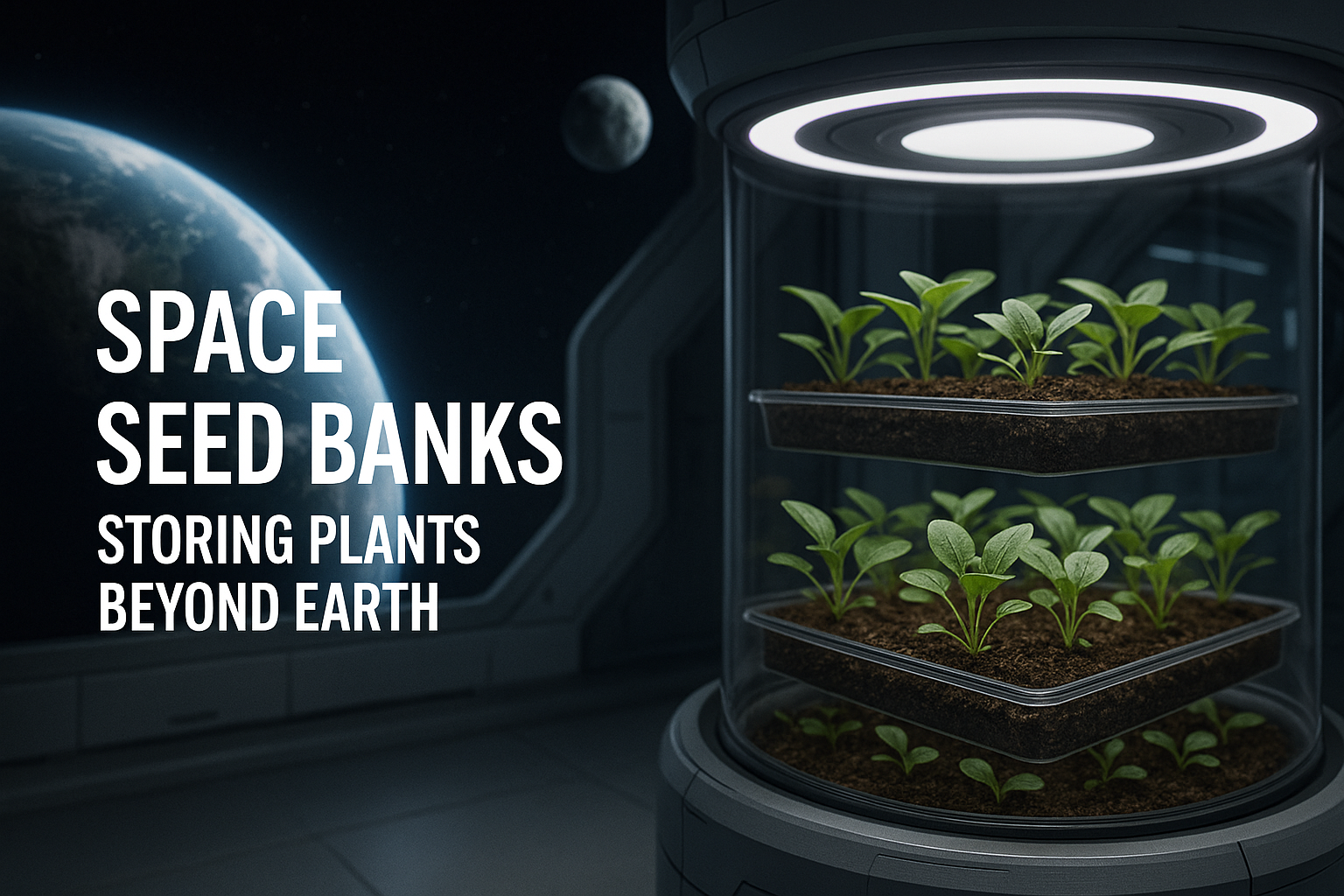

As climate change, nuclear threats, and ecological disasters loom, scientists are looking beyond Earth to safeguard our planet’s botanical future. Space seed banks—facilities that store plant seeds in orbit or on other celestial bodies—are emerging as a cutting-edge solution to ensure the survival of Earth’s flora.
From the Svalbard Global Seed Vault’s extraterrestrial ambitions to NASA’s experiments with growing crops on the International Space Station (ISS), this article explores how humanity is preparing to preserve plant life beyond our planet.
Why Store Seeds in Space?
1. Protecting Against Global Catastrophes
-
Earth-based seed vaults (like Svalbard) are vulnerable to rising sea levels, war, and nuclear fallout.
-
A lunar or Martian seed bank could survive planetary disasters.
2. Preparing for Space Colonization
-
Future Mars or Moon colonies will need self-sustaining agriculture.
-
Storing seeds in space ensures immediate access for astronauts.
3. Studying Plant Survival in Zero Gravity
-
Seeds exposed to cosmic radiation and microgravity could unlock new genetic traits.
Current Space Seed Bank Projects
| Project | Organization | Location | Goal |
|---|---|---|---|
| Lunar Ark Concept | University of Arizona | Proposed for Moon lava tubes | Store 6.7 million Earth species |
| ISS Seed Experiments | NASA/ESA | Low Earth Orbit | Test seed viability in space |
| Svalbard Space Backup | Global Crop Diversity Trust | Arctic (with space plans) | Extraterrestrial seed storage |
| Mars Seed Vault Proposal | SpaceX & Mars Society | Future Martian base | Sustain Martian agriculture |
The Lunar Ark: A Backup for Earth’s Biodiversity
How It Would Work
-
Underground lava tubes on the Moon provide natural radiation shielding.
-
Cryogenically preserved seeds could last centuries without degradation.
-
Solar-powered robots would maintain the facility.
Challenges
-
Cost: Estimated at $1 billion+ for initial setup.
-
Accessibility: Retrieving seeds from the Moon isn’t yet practical.
NASA’s ISS Seed Experiments
Key Findings
✔ Tomato seeds exposed to space grew faster on Earth post-mission.
✔ Radiation-resistant wheat strains developed after ISS exposure.
❌ Some legumes failed to germinate after long-term storage.
Future Missions
-
Artemis Program may include seed storage tests on the Lunar Gateway.
Mars Seed Banks: Feeding Future Colonies
Elon Musk’s Vision
-
SpaceX’s Starship missions could carry seed vaults to Mars by 2030.
-
Hydroponic farms would grow crops using Martian soil supplements.
Obstacles
-
Cosmic radiation may damage DNA over time.
-
Low gravity could alter plant growth cycles.
Could Seeds Survive Deep Space?
Radiation Risks
-
Interplanetary travel exposes seeds to 10x more radiation than Earth.
-
Shielding solutions: Lead-lined containers or underground storage.
Temperature Extremes
-
Lunar nights drop to -173°C (-280°F)—ideal for cryo-storage.
-
Martian dust storms could bury and insulate seed banks.
The Ethics of Space Seed Banks
Who Controls Extraterrestrial Seeds?
-
Corporate vs. global governance debates (e.g., SpaceX vs. UN).
-
Indigenous rights: Should native crop seeds be stored off-world?
“Doomsday” Scenarios
-
If Earth becomes uninhabitable, who gets access to space seeds?
How Space Seed Banks Could Change Agriculture
1. Radiation-Resistant Super Crops
-
Mutant strains from space could withstand drought and disease.
2. Interplanetary Food Security
-
Moon-grown wheat may feed astronauts on long missions.
3. A New Era of “Space Farming”
-
Orbital greenhouses could supply Earth’s food demands.
Can We Build a Seed Bank on the Moon by 2030?
Current Progress
-
University of Arizona has prototype designs.
-
China’s Chang’e missions scout lunar lava tubes for potential sites.
What’s Needed
✔ Funding: Governments or private investors.
✔ Technology: Autonomous maintenance bots.
✔ Legal Frameworks: International space treaties.
Conclusion: Planting the Future Among the Stars
Space seed banks are no longer science fiction—they’re a necessary step in preserving Earth’s biodiversity. Whether on the Moon, Mars, or orbiting stations, these celestial vaults could one day resurrect lost species and sustain human colonies beyond our planet.
As we venture further into the cosmos, the humble seed may become our most valuable cargo.


Leave a Comment