
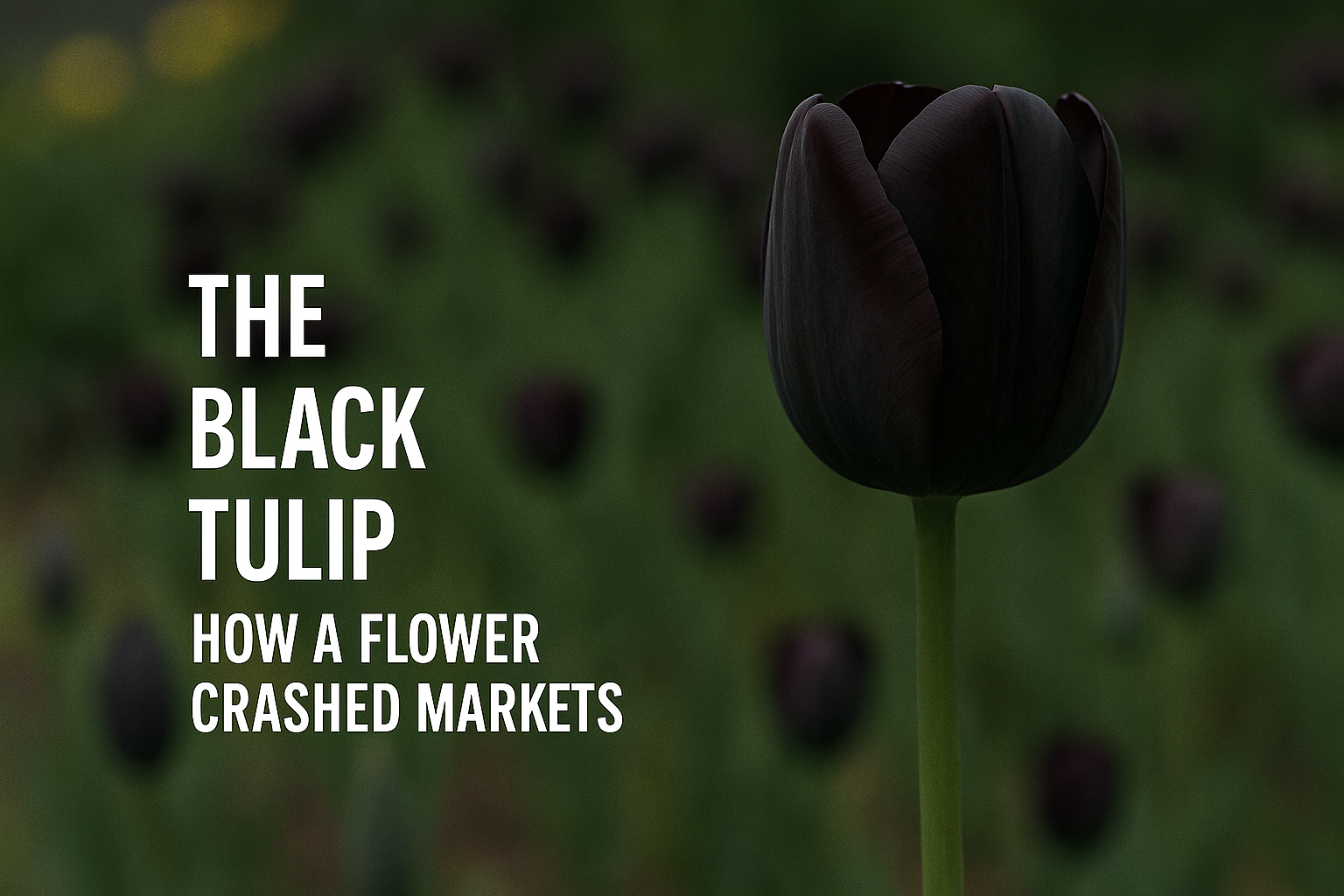

In 17th-century Holland, a single flower bulb could buy a mansion, a ship, or ten years of a craftsman’s wages. At the center of this frenzy was the black tulip—a flower so rare and coveted that its pursuit triggered history’s first speculative bubble, bankrupted thousands, and reshaped global economics.
This article uncovers the true story behind tulip mania, the botany of the elusive black tulip, and why this floral obsession still influences financial markets today.
The Myth of the Black Tulip
Was It Real?
-
True black tulips don’t exist naturally—the darkest are deep purple (e.g., Queen of Night).
-
17th-century “black” tulips were likely “La Tulipe Noire”, a near-black cultivar lost to history.
-
Modern attempts:
-
1986: Dutch breeders created Paul Scherer (closest to black)
-
2024: CRISPR-edited tulips with anthocyanin boosters
-
Why the Obsession?
-
Black symbolized power and rarity in Dutch culture.
-
Tulips were status symbols—the rarer, the more valuable.
Tulip Mania: The Bubble That Burst
Timeline of Madness (1634–1637)
| Year | Event | Bulb Price (Florins) | Equivalent Value Today |
|---|---|---|---|
| 1634 | Tulip trading begins | 1,000 | $50,000 |
| 1636 | Futures market opens | 5,500 | $275,000 |
| Feb 1637 | Peak: Semper Augustus bulb sale | 10,000 | $500,000 |
| Feb 1637 | Market crashes | 100 | $5,000 |
Most Infamous Sale:
-
A single Viceroy tulip bulb traded for:
-
4 tons of wheat
-
8 pigs
-
12 sheep
-
2 barrels of wine
-
The Science Behind the Scarcity
Why Were Tulips So Valuable?
-
Viral Beauty – “Broken” tulips (streaked petals) caused by tulip-breaking virus (TBV).
-
Slow Reproduction – Bulbs take 7-12 years to flower from seed.
-
No Substitutes – Impossible to counterfeit (pre-microscope era).
The Role of the Tulip Virus
-
TBV created unique color patterns—unpredictable and irreplicable.
-
Infected bulbs weakened over time, making healthy bulbs even rarer.
Key Players in the Frenzy
1. The Growers
-
Carolius Clusius – Brought tulips to Holland, hoarded bulbs.
-
Pauw van Adrichem – Sold “black tulips” (likely dyed).
2. The Speculators
-
Weavers & Farmers – Abandoned trades to gamble on bulbs.
-
“Tulip Notaries” – Specialized lawyers for bulb contracts.
3. The Crash Culprits
-
Buyers Defaulted – Refused to pay peak prices.
-
Government Panic – Voided contracts, worsening losses.
Modern Parallels: From Tulips to Bitcoin
1. NFT Mania
-
Like tulips, NFTs are non-tangible, hype-driven assets.
-
CryptoPunks vs. Semper Augustus: Both crashed 90%+.
2. Dot-Com Bubble
-
Pets.com = 1637’s Switsers (worthless post-crash).
3. Lessons Unlearned
-
“This time is different” mentality persists.
-
Asset detachment – Tulips/Bitcoin have no intrinsic value.
The Black Tulip in Culture
1. Literature
-
Alexandre Dumas’ The Black Tulip (1850) – Fictional breeding competition.
2. Art
-
Rachel Ruysch’s paintings – Sold for more than actual bulbs post-crash.
3. Economics
-
Term “tulip mania” now describes any irrational bubble.
Could It Happen Again?
1. Today’s Tulip Market
-
Rare bulbs still sell for 500–2,000 (not mansions).
-
Tulip futures banned in Holland since 1637.
2. Warning Signs in 2024
-
AI startup valuations mirror 1636 speculation.
-
Collectibles market (e.g., rare Pokémon cards).
Where to See Historic Tulips Today
| Location | Collection | Rarest Bulb |
|---|---|---|
| Keukenhof Gardens, Netherlands | 7 million tulips | Semper Augustus replicas |
| Hortus Bulborum, Limmen | Heirloom varieties | 17th-century cultivars |
| Amsterdam Tulip Museum | Crash artifacts | 1637 trading contracts |
Pro Tip: Visit in April for peak blooms.
Conclusion: Beauty vs. Madness
The black tulip’s legacy is a warning: when speculation detaches from reality, disaster follows. Yet its allure endures—a testament to humanity’s weakness for rarity and beauty.
Next time you see a tulip, remember: it once held the power to make or break empires.


Leave a Comment