
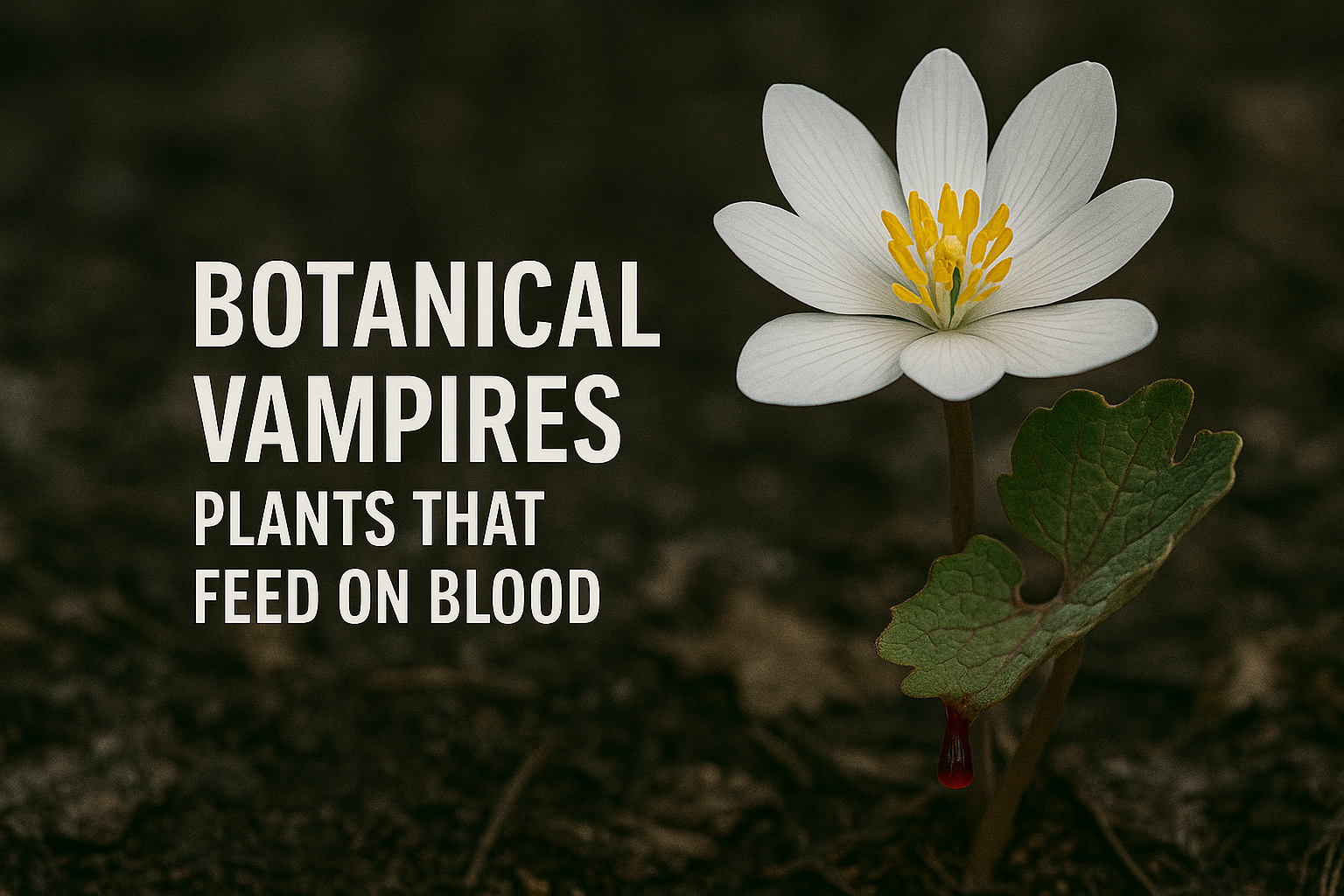

Deep in the rainforests and hidden in folklore, a bizarre group of plants thrives on something far more sinister than sunlight and water—blood. While most plants rely on photosynthesis, these botanical vampires have evolved terrifying adaptations to consume blood, decompose flesh, and even mimic wounds to lure prey.
From hematophagous vines that drain animals to corpse-scented flowers that grow on rotting meat, this article uncovers the dark world of plants with a thirst for blood, their evolutionary secrets, and how science is unraveling their macabre survival strategies.
The Science of Blood-Feeding Plants
Most plants absorb nutrients from soil, but some have developed alternative feeding strategies, including:
✔ Carnivory – Trapping and digesting insects (e.g., Venus flytraps).
✔ Parasitism – Stealing nutrients from other plants (e.g., dodder).
✔ Saprophytism – Feeding on decaying matter (e.g., corpse flowers).
But a rare few have taken it further—evolving to exploit blood as a nutrient source.
5 Real Blood-Feeding Plants
| Plant | Blood Source | Method of Feeding |
|---|---|---|
| Dracula Orchid (Dracula spp.) | Fungus gnats | Mimics mushrooms to attract blood-sucking insects |
| Nepenthes hemsleyana (Pitcher Plant) | Bat guano | Lures bats to roost, feeds on their waste |
| Hydnora africana (Jackal Food) | Mammal blood | Grows underground, attracts carrion beetles |
| Sapria himalayana (Corpse Flower) | Decomposing flesh | Parasitic, grows on dead animals |
| Cuscuta (Dodder) | Plant “blood” (phloem sap) | Strangles host plants to steal nutrients |
1. Dracula Orchids: The Fungus Mimics
How They Exploit Blood
-
These orchids resemble mushrooms to attract fungus gnats (which feed on blood from wounds).
-
The gnats get trapped in the flower, transferring blood-rich fungal spores.
Scientific Discovery
-
Researchers found traces of hemoglobin in their roots—likely from insect blood.
2. Nepenthes hemsleyana: The Bat Feeder
Blood Connection
-
This pitcher plant lures bats with an ultrasonic-reflective leaf structure.
-
Bats roost inside, leaving guano (rich in nitrogen from blood meals).
Symbiotic Relationship
-
Bats get shelter; the plant gets nutrients from digested blood.
3. Hydnora africana: The Underground Vampire
Feeding Strategy
-
Grows entirely below ground, emerging only to flower.
-
Smells like rotting meat, attracting carrion beetles that feed on blood.
Cultural Myth
-
Called “jackal food” because locals believed jackals dug it up to eat blood-soaked soil.
4. Sapria himalayana: The Corpse Flower
Blood Dependency
-
Parasitic plant that grows on decomposing animals.
-
Absorbs iron and proteins from rotting flesh.
Horror Factor
-
Blooms smell like death to attract flesh flies.
5. Dodder: The Plant Vampire
How It Feeds
-
Lacks chlorophyll—wraps around host plants to suck their sap (plant “blood”).
-
Can detect prey by scent and grow toward it.
Agricultural Threat
-
Costs farmers millions yearly by strangling crops.
Why Do Plants Evolve to Feed on Blood?
1. Nutrient Scarcity
-
Blood is rich in iron, nitrogen, and proteins—rare in poor soils.
2. Low Competition
-
Few plants exploit this niche, reducing rivalry.
3. Survival in Darkness
-
Some grow where sunlight is limited (underground, dense forests).
Myths vs. Reality
❌ Myth: “There are plants that drink human blood.”
✅ Fact: None directly consume human blood—but some use blood-seeking insects.
❌ Myth: “Vampire plants are dangerous to humans.”
✅ Fact: They target small animals or insects, not people.
❌ Myth: “They’re supernatural.”
✅ Fact: Their adaptations are evolutionary, not magical.
Scientific & Medical Applications
1. Bio-Inspired Medicine
-
Studying hematophagous plants could improve iron supplements.
2. Pest Control
-
Mimicking their lures could trap disease-carrying insects.
3. Forensic Botany
-
Corpse flowers help estimate time of death in criminal investigations.
Can You Grow Blood-Feeding Plants at Home?
Easiest to Cultivate
✔ Dracula orchids – Need high humidity, low light.
✔ Dodder – Grows easily but may invade other plants.
Warning
-
Some species (Hydnora, Sapria) are nearly impossible to cultivate.
-
Never harvest from the wild—many are endangered.
Conservation: Protecting Nature’s Vampires
Threats
-
Deforestation destroys habitats.
-
Poaching for rare plant collectors.
How to Help
-
Support rainforest conservation (e.g., Rainforest Trust).
-
Buy only nursery-propagated specimens.
Conclusion: The Dark Side of Botany
These botanical vampires prove nature is stranger than fiction. While they don’t thirst for human blood, their macabre survival tactics reveal evolution’s creativity.
As science uncovers more, these plants may offer medical breakthroughs, eco-friendly pest control, and even clues to life on other planets.


Leave a Comment