
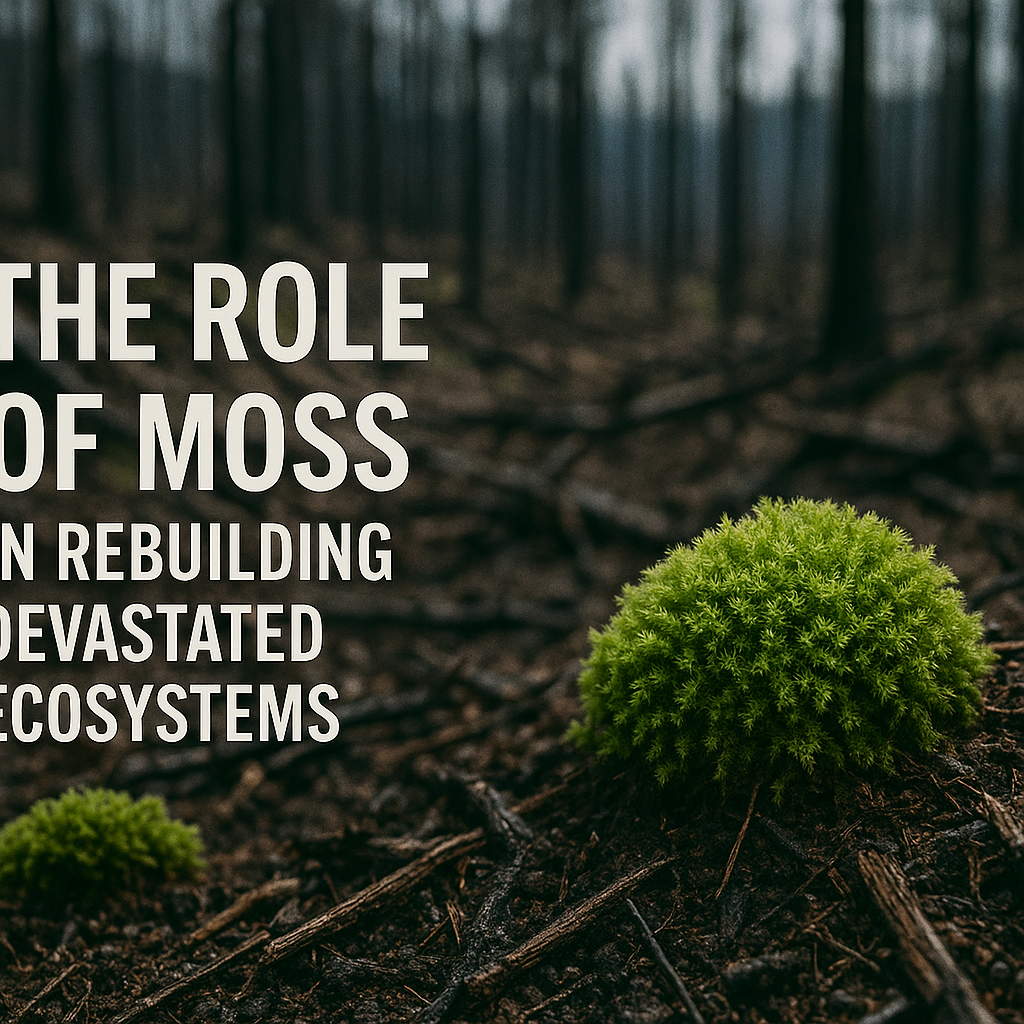

Beneath our feet, an unsung hero works silently to heal damaged landscapes—moss. Often overlooked as mere green fuzz, these ancient plants (dating back 450 million years) are nature’s ultimate ecosystem engineers. From volcanic ruins to deforested slopes, mosses are first responders in ecological recovery, stabilizing soil, retaining water, and creating conditions for forests to regrow.
This article explores the remarkable science behind moss-driven restoration, real-world examples of its impact, and how researchers are harnessing its power to combat climate change, erosion, and biodiversity loss.
Why Moss? The Science of Small but Mighty Plants
1. Unique Biological Traits
-
No roots – Absorbs water/nutrients through leaves, allowing growth on bare rock.
-
Desiccation tolerance – Can survive losing 98% of water, then revive in minutes.
-
Spore reproduction – One capsule releases 50,000+ spores, spreading rapidly.
2. How Moss Colonizes Barren Land
-
Pioneer species – First to grow on lava flows, mining waste, and burnt soil.
-
Biofilms – Secretions bind soil particles, preventing erosion.
-
Microclimate creation – Shades soil, reducing evaporation by 30%.
Moss as an Ecosystem Architect: 5 Critical Roles
| Function | Mechanism | Real-World Impact |
|---|---|---|
| Soil Stabilization | Rhizoids anchor loose sediment | Prevents landslides after wildfires |
| Water Retention | Holds 20x its weight in water | Recharges groundwater in degraded areas |
| Nitrogen Fixation | Hosts cyanobacteria partners | Fertilizes soil for future plants |
| Carbon Sequestration | Stores CO2 in peat bogs | Arctic moss locks away 1/3 of soil carbon |
| Habitat Creation | Shelter for microbes, insects | Birds use moss for nesting material |
Case Studies: Moss in Action
1. Mount St. Helens Recovery (USA)
-
After the 1980 eruption, moss mats were the first life on sterile pyroclastic flows.
-
Within 5 years, moss enabled lupines and shrubs to establish.
2. Iceland’s Afforestation Project
-
Birch forests now grow where lava moss (Racomitrium) first colonized.
-
Government funds moss inoculation to combat desertification.
3. China’s Loess Plateau Restoration
-
Moss reduced soil erosion by 60% on degraded slopes.
-
Enabled terraced farming revival.
Moss vs. Climate Change
1. Peatlands: The Unsung Carbon Vaults
-
Sphagnum moss forms peat storing 550 gigatons of CO2 (2x global forest carbon).
-
Draining peat bogs releases 10% of annual fossil fuel emissions.
2. Urban Heat Island Mitigation
-
Moss roofs in cities cool buildings 5°C+ by evaporative cooling.
3. Air Pollution Sponge
-
One square meter of moss removes 1.5kg of particulate matter/year.
How Scientists Are Amplifying Moss’s Power
1. Moss “Probiotics” for Mining Sites
-
Biocrust inoculants (moss + cyanobacteria) speed up tailings recovery.
2. 3D-Printed Moss Scaffolds
-
UK researchers print biodegradable grids to help moss colonize steep slopes.
3. DNA Editing for Drought Resistance
-
Projects like MossTech engineer super-moss for arid regions.
Can You Use Moss for Home Restoration?
DIY Moss “Slurry” for Erosion Control
-
Blend: 2 cups moss + 2 cups buttermilk + 1 tsp sugar.
-
Paint: Apply to bare soil/logs.
-
Mist: Keep damp for 3 weeks.
Best Species for Beginners
-
Sheet moss (Hypnum) – Thrives in shade.
-
Cushion moss (Leucobryum) – Survives drought.
-
Sphagnum – Ideal for wetlands.
Threats to Moss Ecosystems
1. Overharvesting
-
Orchid industry removes 4,000+ tons of sphagnum/year.
2. Climate Tipping Points
-
Arctic moss banks melting permafrost release ancient carbon.
3. Pollution Sensitivity
-
Dies at pH <5, making it an early acid rain casualty.
How to Protect & Promote Moss
✔ Support peatland conservation (e.g., Global Peatlands Initiative).
✔ Use moss lawns instead of grass (saves water, no mowing).
✔ Avoid wild harvesting – Buy nursery-propagated moss.
Future Frontiers: Moss in Space?
-
NASA tests moss (Syntrichia) for Mars terraforming (survives radiation/vacuum).
-
Proposed lunar moss greenhouses to produce oxygen.
Conclusion: Ancient Plants, Modern Solutions
Moss proves that size doesn’t equal impact. These tiny plants have quietly shaped Earth’s ecosystems for eons—and now offer scalable solutions for our most pressing environmental crises. Whether you’re a gardener, policymaker, or simply a nature lover, supporting moss recovery means investing in a greener, more resilient future.


Leave a Comment