
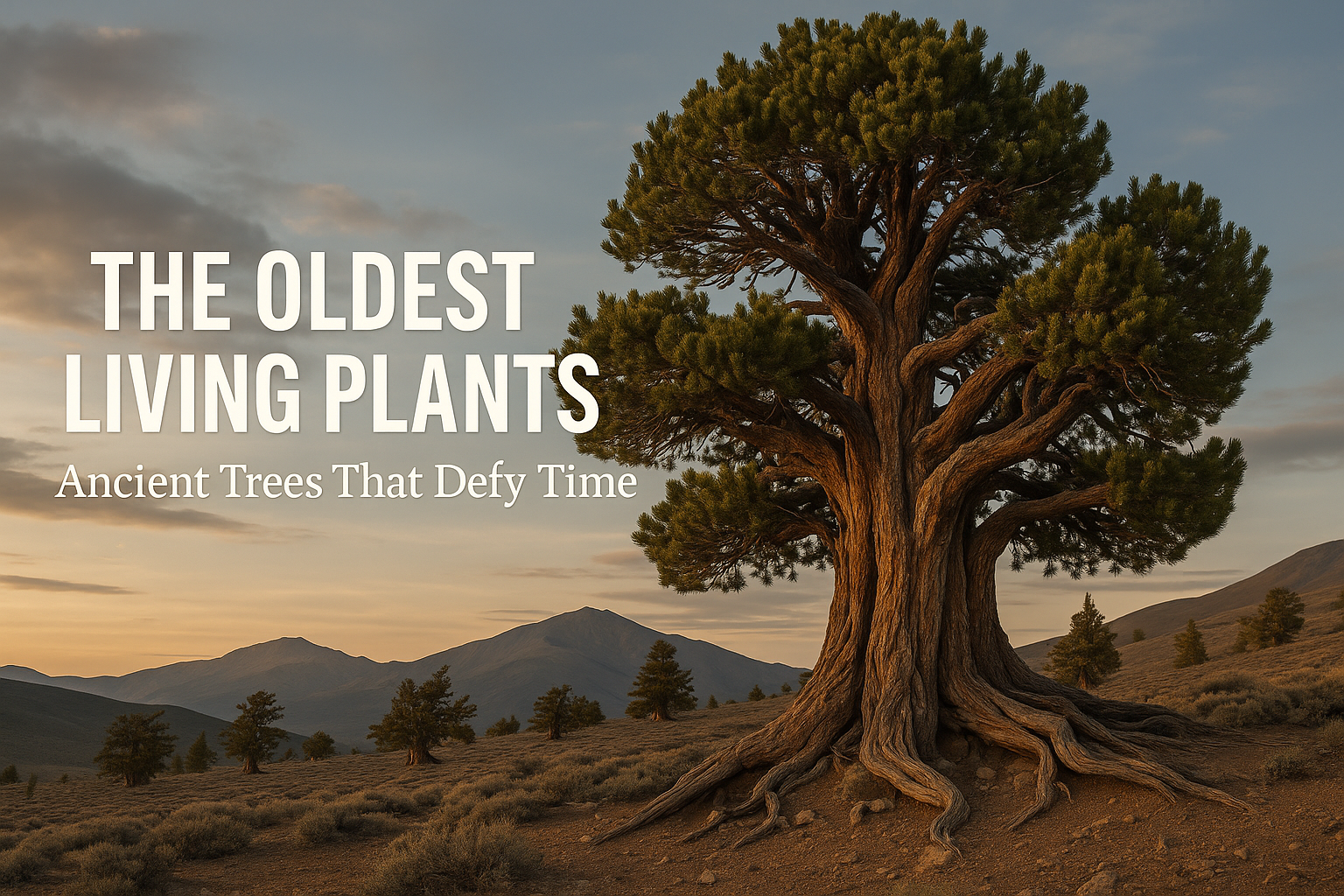

Some trees have witnessed the rise and fall of civilizations, survived ice ages, and stood tall for thousands of years—outliving empires, wars, and climate shifts. These ancient botanical wonders are not just old; they are living records of Earth’s history, with secrets locked in their rings.
From 5,000-year-old bristlecone pines to clonal colonies dating back 80,000 years, this article explores the world’s oldest living plants, their survival strategies, and why scientists are racing to protect them in a changing world.
What Makes a Plant “Ancient”?
1. Individual Longevity
-
Trees like the Great Basin bristlecone pine live for millennia as single organisms.
2. Clonal Colonies
-
Some plants, like Pando the quaking aspen, regenerate from shared roots for tens of thousands of years.
3. Slow Growth + Harsh Conditions
-
Extreme environments (high mountains, deserts) force trees to grow slowly, extending their lifespans.
The 10 Oldest Living Plants on Earth
| Plant | Age (Years) | Location | Key Survival Secret |
|---|---|---|---|
| Methuselah (Bristlecone Pine) | 4,853 | California, USA | Resinous wood resists rot, insects |
| Pando (Quaking Aspen Colony) | 80,000+ | Utah, USA | Regrows from massive underground roots |
| Prometheus (Bristlecone Pine) | 4,900* | Nevada, USA | *Cut down in 1964, oldest known at time |
| Gran Abuelo (Alerce Tree) | 3,646 | Chile | Fire-resistant bark |
| Sarv-e Abarkuh (Cypress) | 4,000–5,000 | Iran | Deep taproots access groundwater |
| Llangernyw Yew | 4,000–5,000 | Wales, UK | Hollow trunk avoids energy waste |
| Jurupa Oak (Clonal Colony) | 13,000+ | California, USA | Survives fires by resprouting |
| Old Tjikko (Norway Spruce) | 9,550 | Sweden | New trunks grow from ancient roots |
| The Senator (Bald Cypress) | 3,500* | Florida, USA | *Destroyed by fire in 2012 |
| Alerce Milenario (Patagonian Cypress) | 5,484* | Chile | *Estimated via ring count + modeling |
Bristlecone Pines: The Ultimate Survivors
Why They Live So Long
-
Dense, resinous wood repels insects and fungi.
-
Slow growth (1 inch per century!) reduces metabolic stress.
-
High-altitude habitats limit competition.
Scientific Value
-
Their rings provide 9,000+ years of climate data.
-
Used to calibrate carbon-14 dating accuracy.
Pando: The 80,000-Year-Old Forest in a Single Tree
What Makes It Unique?
-
47,000 stems share one root system.
-
Weighs 6,000 tons (heaviest known organism).
-
Dying now due to drought, grazing, and human impact.
Can It Be Saved?
-
Fenced areas show recovery signs.
-
Scientists debate assisted migration as temperatures rise.
Clonal Colonies: Immortal Plants?
Some plants cheat death by resprouting genetically identical stems:
-
Jurupa Oak – Survived 13,000 years of California droughts.
-
King Clone Creosote – 11,700-year-old ring in Mojave Desert.
-
Posidonia Oceanica (Seagrass) – 100,000-year-old Mediterranean meadow.
How Scientists Date Ancient Plants
1. Dendrochronology (Ring Counting)
-
Works for trees up to ~5,000 years old.
-
Limited by trunk preservation.
2. Radiocarbon Dating
-
Used for older clonal plants.
-
Confirmed Pando’s roots predate human agriculture.
3. Genetic Analysis
-
Estimates when clones first diverged.
-
Revealed Jurupa Oak’s Ice Age origins.
Threats to Ancient Plants
1. Climate Change
-
Pando’s aspen struggle with drought.
-
Bristlecone pines face bark beetle invasions as winters warm.
2. Human Impact
-
Prometheus was cut down for research in 1964.
-
Tourists damage roots by trampling soil.
3. Legal Protection Gaps
-
Gran Abuelo only became protected in 2022.
-
Many ancient trees lack conservation status.
Can You Visit These Ancient Trees?
Where to Go (Responsibly)
-
Methuselah Grove, CA – See the oldest non-clonal tree (exact location hidden).
-
Fishlake National Forest, UT – Walk among Pando’s stems.
-
Alerce Costero NP, Chile – Visit Gran Abuelo via boardwalk.
Ethical Guidelines
✔ Stay on marked paths (root damage is irreversible).
✔ Never carve initials (a single cut can introduce disease).
✔ Support local conservation (donate to groups like Ancient Forest Alliance).
Lessons From Millennia-Old Plants
1. Survival Through Adaptation
-
Bristlecones thrive where nothing else can.
-
Clonal plants sacrifice speed for longevity.
2. Climate Archives
-
Tree rings reveal past megadroughts—key for predicting future risks.
3. The Fragility of Immortality
-
Even 80,000-year-old organisms can die within decades if conditions change.
Conclusion: Guardians of Deep Time
These ancient plants are more than natural wonders—they’re time capsules, climate scientists, and symbols of resilience. As modern threats accelerate, protecting them isn’t just about saving trees; it’s about preserving living libraries of Earth’s history.
The next time you see a gnarled, ancient tree, remember: its roots may have touched a world where mammoths still roamed


Leave a Comment