
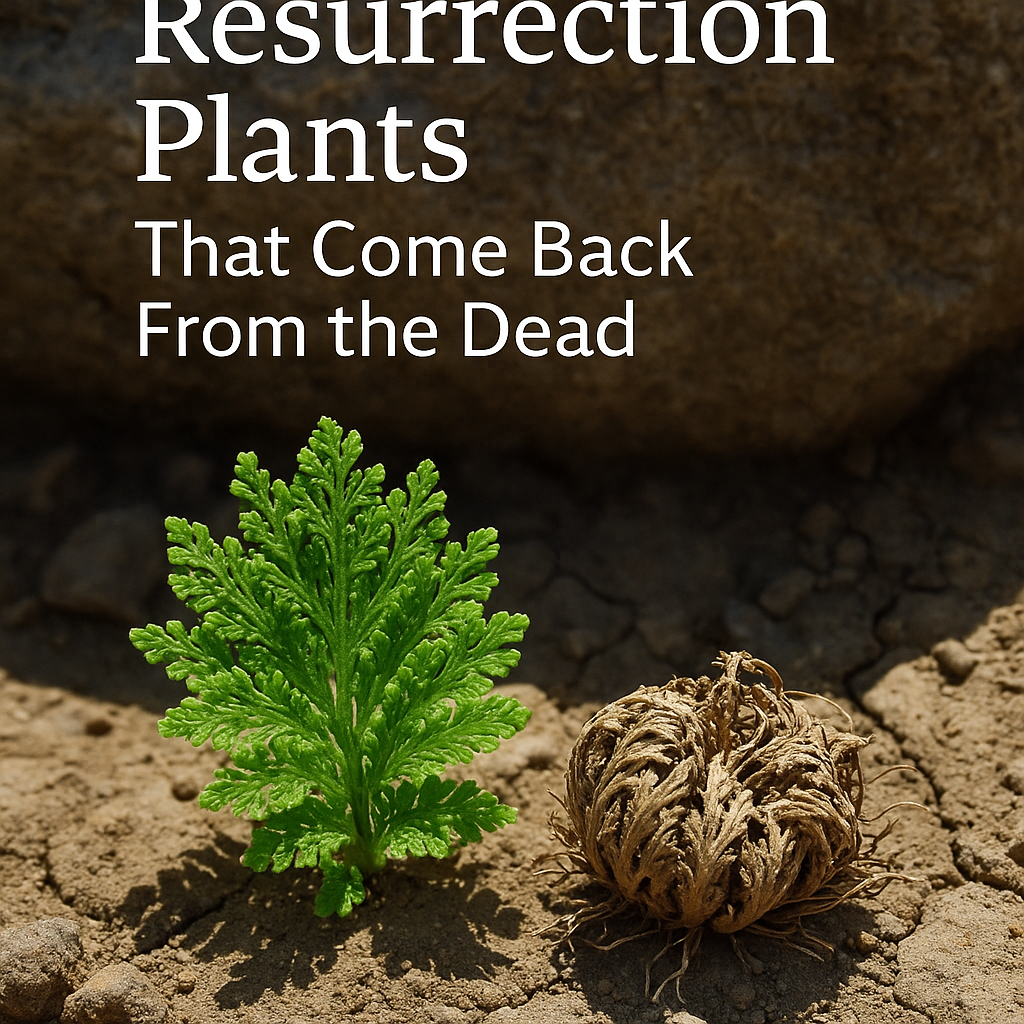

Nature has perfected the art of survival through some of the most extraordinary adaptations, but few are as dramatic as resurrection plants—botanical miracles that can lose 95% of their water content, appear completely dead, and then spring back to life with just a drop of rain.
These incredible plants defy death in some of Earth’s harshest environments, from scorching deserts to rocky cliffs. Scientists study them for clues about drought resistance, climate change survival, and even potential applications for human medicine and space agriculture.
This article explores the science, myths, and future possibilities of resurrection plants—nature’s ultimate survivors.
What Are Resurrection Plants?
Resurrection plants belong to a group of desiccation-tolerant plants that can survive extreme dehydration. Unlike most plants, which die when they lose just 10-20% of their water, these species can dry out to a crisp and revive within hours of rehydration.
Key Species of Resurrection Plants
| Plant Name | Native Region | Unique Trait |
|---|---|---|
| Rose of Jericho (Selaginella lepidophylla) | Chihuahuan Desert | Rolls into a ball when dry, unfurls in water |
| Resurrection Fern (Pleopeltis polypodioides) | Southeastern U.S. | Grows on trees, revives after rain |
| Myrothamnus flabellifolius | Southern Africa | Used in traditional medicine |
| Craterostigma plantagineum | Africa | Model organism for drought research |
How Do Resurrection Plants Cheat Death?
1. Cellular Protection: Sugars and Proteins
-
They produce trehalose (a natural sugar) that protects cells from dehydration damage.
-
Special dehydrin proteins prevent cell membranes from collapsing.
2. Folding Leaves to Conserve Moisture
-
Some, like the Rose of Jericho, curl into a tight ball to minimize surface area.
-
Others, like the Resurrection Fern, shrivel and turn brown to reduce water loss.
3. DNA Repair Upon Rehydration
-
Once water returns, they rapidly repair DNA damage caused by drying.
-
Some can recover even after years of dormancy.
Cultural and Historical Significance
1. Biblical Legends: The “Resurrection Plant”
-
The Rose of Jericho is linked to biblical stories of rebirth.
-
Some cultures believe it brings good luck, fertility, or protection.
2. Traditional Medicine
-
Myrothamnus flabellifolius is used in African herbal remedies for colds and inflammation.
-
The Resurrection Fern was once used by Native Americans for wound healing.
3. Survival Symbolism
-
Given as gifts to represent resilience and renewal.
-
Popular among survivalists and preppers for its hardiness.
Modern Science & Future Applications
1. Drought-Resistant Crops
-
Scientists study resurrection plants to engineer crops that survive water scarcity.
-
Genes from Craterostigma could help create climate-proof wheat and rice.
2. Medical Breakthroughs
-
Their protective sugars may help preserve human cells, organs, and vaccines without refrigeration.
-
Research into anti-aging skincare (trehalose is already used in cosmetics).
3. Space Farming Potential
-
NASA investigates resurrection plants for growing food on Mars due to their extreme adaptability.
-
Could help sustain long-term space missions.
Can You Grow a Resurrection Plant at Home?
Best Species for Beginners
✔ Rose of Jericho – Easy to revive, sold as a “dormant ball.”
✔ Resurrection Fern – Grows on bark or rocks, needs high humidity.
Care Tips
-
Rehydration: Place in shallow water, watch it unfold in 3-4 hours.
-
Drying Out: Let it dry completely between waterings to mimic natural cycles.
-
Light: Bright, indirect light (too much sun can scorch it).
Warning About Fake “Resurrection Plants”
-
Some sellers market dyed or chemically-treated ferns as resurrection plants.
-
Buy from reputable nurseries to get the real species.
Conservation: Are Resurrection Plants Endangered?
While not globally threatened, some species face:
-
Habitat loss from agriculture and climate change.
-
Overharvesting for souvenirs and traditional medicine.
-
Legal protections exist in some regions (e.g., South Africa restricts Myrothamnus harvesting).
Conclusion: Nature’s Ultimate Survivors
Resurrection plants blur the line between life and death, offering hope for agriculture, medicine, and space exploration. As climate change intensifies, their secrets may become crucial for human survival.
Whether as a scientific marvel, a spiritual symbol, or a quirky houseplant, these botanical zombies remind us that even in the harshest conditions, life finds a way.


Leave a Comment