
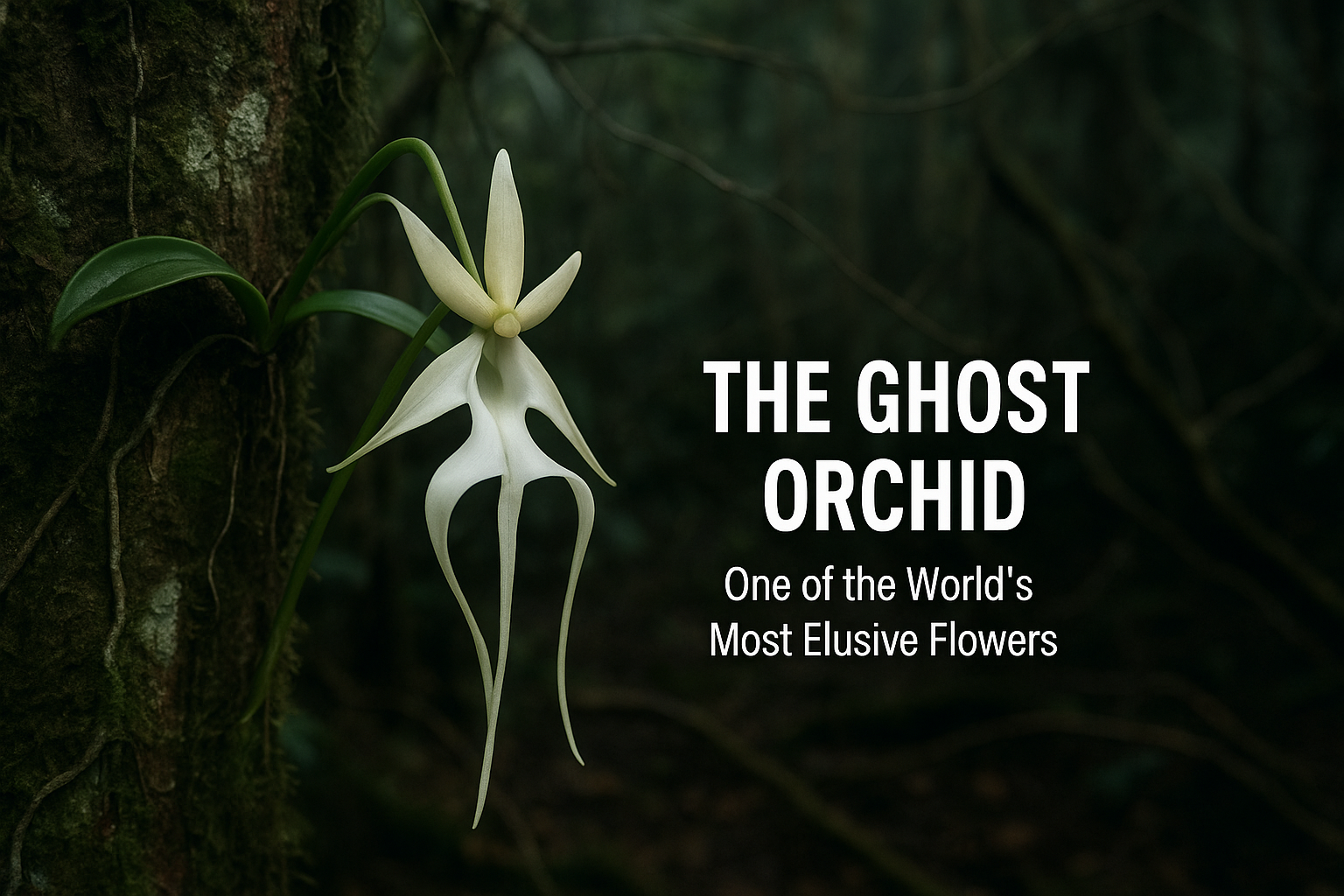

Deep in the shadowy swamps of Florida and Cuba, a spectral beauty haunts the damp air—the Ghost Orchid (Dendrophylax lindenii). With its eerie, floating white petals and mysterious blooming habits, this rare flower has captivated botanists, poachers, and nature lovers for centuries.
Unlike most plants, the Ghost Orchid has no leaves, surviving purely through its roots and fleeting blooms that appear like apparitions in the night. Its elusive nature and endangered status make it one of the most sought-after and protected flowers on Earth.
This article uncovers the secrets of the Ghost Orchid, exploring its biology, cultural significance, and the ongoing battle to save it from extinction.
What Makes the Ghost Orchid So Rare?
1. A Flower Without Leaves
-
The Ghost Orchid is a leafless epiphyte, meaning it grows on trees (usually cypress or pond apple) and absorbs nutrients through its photosynthetic roots.
-
Its silvery-green roots blend into the bark, making it nearly invisible when not in bloom.
2. Its Unpredictable and Fragile Blooms
-
The orchid produces 1-10 white, fragrant flowers per year, typically between June and August.
-
Each bloom lasts only 1-2 weeks, and some plants skip flowering for years.
-
The petals appear to “float” in mid-air due to a thin, nearly invisible stem.
3. Extreme Habitat Specificity
-
Found only in southwest Florida (Big Cypress, Fakahatchee Strand) and Cuba.
-
Requires high humidity, low light, and very clean air—indicators of an undisturbed ecosystem.
4. A Pollination Mystery
-
Long believed to be pollinated by the Giant Sphinx Moth, but confirmed only in 2008 via night-vision cameras.
-
The moth’s 12-inch proboscis is one of the few long enough to reach the nectar.
The Ghost Orchid in Culture and History
1. Native American Legends
-
Seminole tribes called it the “Spirit of the Swamp”, believing it carried messages from ancestors.
-
Some legends warned that picking it would bring misfortune.
2. The Orchid Fever of the 1800s
-
Victorian-era collectors hunted it to near extinction, driven by its rarity and beauty.
-
Poachers still risk jail time and fines to steal wild specimens.
3. Literary and Cinematic Fame
-
Featured in Susan Orlean’s The Orchid Thief (1998), which inspired the film Adaptation (2002).
-
Symbolizes obsession, rarity, and the clash between humans and nature.
Science and Conservation: Can the Ghost Orchid Be Saved?
1. Why It’s Nearly Extinct in the Wild
-
Habitat loss (draining of wetlands for agriculture).
-
Climate change (rising temperatures disrupt its delicate ecosystem).
-
Poaching (illegal collectors pay thousands for a single plant).
2. Breakthroughs in Cultivation
-
Botanists at Florida’s Naples Botanical Garden successfully propagated Ghost Orchids in labs (2014).
-
Scientists use tissue culture techniques to grow seedlings without harming wild populations.
3. Rewilding Efforts
-
Organizations like the Florida Panther National Wildlife Refuge reintroduce lab-grown orchids into protected swamps.
-
Camera traps monitor wild populations and track pollination success.
4. How You Can Help Protect It
-
Never buy wild-collected Ghost Orchids (only lab-grown from certified sellers).
-
Support wetland conservation (donate to groups like The Nature Conservancy).
-
Visit responsibly (guided eco-tours minimize human impact).
Where to See a Ghost Orchid (Without Harming It)
1. Corkscrew Swamp Sanctuary (Florida)
-
Home to a famous Ghost Orchid visible from a boardwalk (blooms sporadically in summer).
2. Naples Botanical Garden (Florida)
-
Displays lab-grown specimens for public education.
3. Cuba’s Remote Swamps
-
Some of the healthiest remaining populations, but access is restricted.
Conclusion: Will the Ghost Orchid Survive?
The Ghost Orchid remains a symbol of nature’s fragility and resilience. While science and conservation offer hope, its survival depends on habitat protection, anti-poaching laws, and public awareness.
For now, this phantom of the swamp continues to enchant those lucky enough to witness its fleeting blooms—reminding us that some of Earth’s greatest wonders are also its most vulnerable.


Leave a Comment