
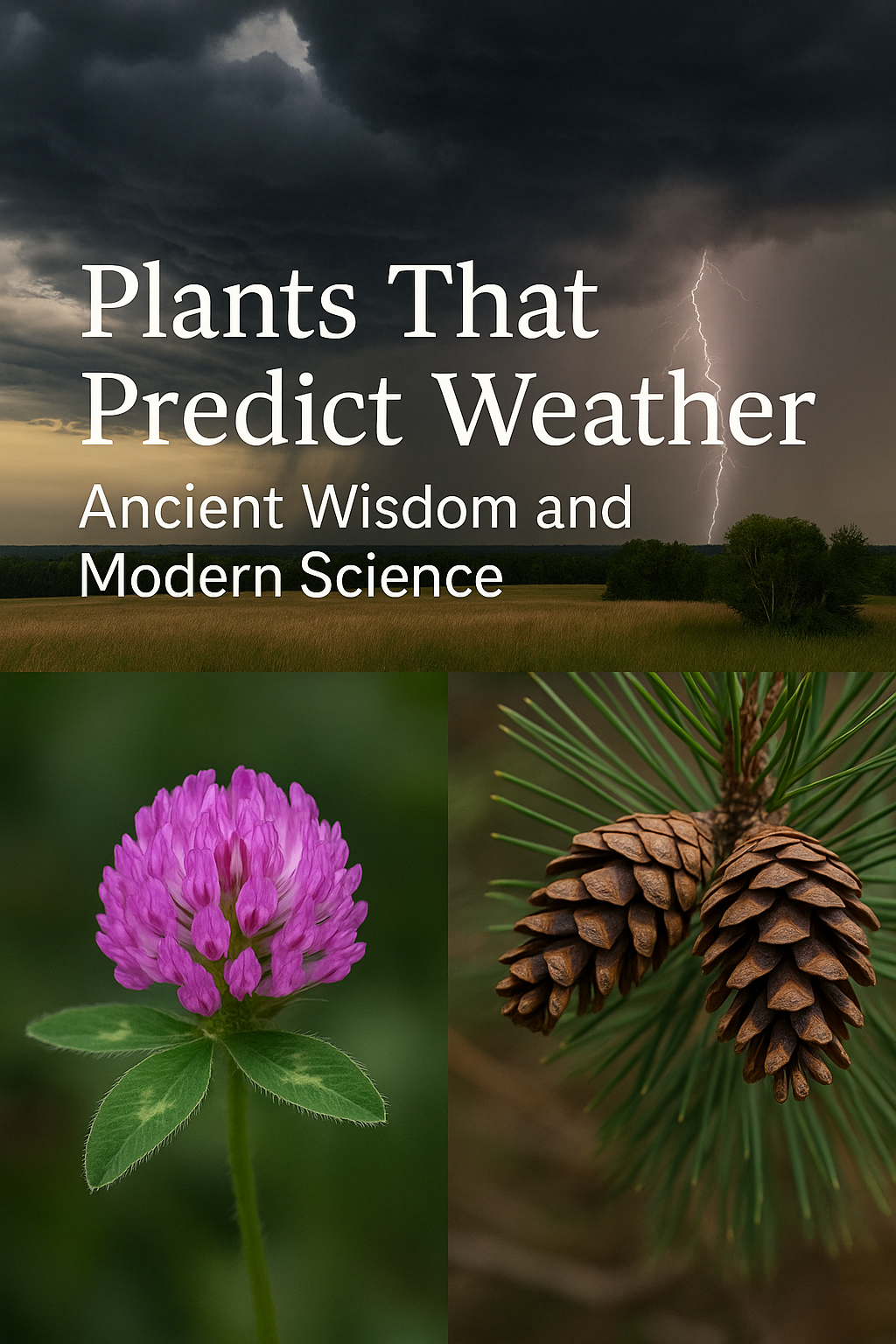

For centuries, humans have relied on nature’s subtle cues to predict weather changes. Among the most fascinating natural forecasters are plants—living barometers that respond to atmospheric shifts long before modern technology detects them. From ancient agricultural traditions to cutting-edge scientific research, the ability of certain plants to predict weather has been both a survival tool and a subject of intrigue.
This article explores the remarkable world of weather-predicting plants, blending folklore with modern botany to reveal how flora anticipates rain, storms, and droughts.
How Plants Sense Weather Changes
Plants lack nerves and brains, but they are highly sensitive to environmental changes. Their responses are based on:
-
Humidity shifts – Some plants close or open their flowers based on moisture in the air.
-
Atmospheric pressure changes – Certain species react to pressure drops before storms.
-
Temperature fluctuations – Many plants alter growth patterns in response to heat or cold waves.
These adaptations help them survive—and inadvertently provide clues about upcoming weather.
Ancient Wisdom: Plants as Weather Forecasters
Long before meteorology existed, farmers and indigenous cultures observed plant behavior to predict rain, storms, and seasonal shifts. Here are some well-documented examples:
1. The Rain Tree (Albizia saman) – “The Leaky Tree”
-
In tropical regions, this tree’s leaves fold upward before rain, reducing water loss.
-
Some cultures noticed that liquid drips from its branches hours before a downpour, earning it the nickname “the rain tree.”
2. Pine Cones – Nature’s Hygrometers
-
Pine cones open in dry weather and close when humidity rises, signaling incoming rain.
-
This mechanism helps protect seeds from moisture damage.
3. Scarlet Pimpernel (Anagallis arvensis) – “The Poor Man’s Barometer”
-
This small flower closes its petals when atmospheric pressure drops, indicating approaching storms.
-
European farmers used it as a simple weather predictor for centuries.
4. Tulip Poplar Leaves – Twisting Before Storms
-
The leaves of the tulip poplar tree twist unusually before heavy winds or rain.
-
Some Native American tribes used this sign to prepare for bad weather.
5. Chickweed (Stellaria media) – The Morning Dew Predictor
-
When chickweed flowers stay closed in the morning, rain is likely on the way.
-
This behavior is linked to high humidity preventing the petals from opening.
Modern Science Validates Plant Weather Predictions
While folklore is rich with plant-based weather lore, modern research confirms that many of these observations have a scientific basis.
1. Plants Detect Pressure Changes
-
Studies show that some plants respond to barometric pressure drops before storms by altering leaf positions.
-
This may be an evolutionary adaptation to reduce wind damage.
2. Electrical Signals in Plants Before Storms
-
Research from Tel Aviv University found that plants emit electrical signals when exposed to drought or sudden humidity shifts.
-
These signals could be an early warning system for environmental stress.
3. NASA’s Research on Plant Movement
-
NASA experiments revealed that certain plants, like mimosa pudica (the sensitive plant), react to environmental changes faster than expected.
-
This suggests that plants may have evolved rapid-response mechanisms to survive extreme weather.
Can We Use Plants as Natural Weather Forecasters Today?
While technology dominates meteorology, observing plants can still offer useful insights, especially in remote areas without weather stations.
DIY Plant-Based Weather Prediction
-
Watch pine cones: If they close, expect rain within 24 hours.
-
Observe dandelions: They close before rain to protect pollen.
-
Check morning glory flowers: If they stay open late, humidity is high, indicating possible rain.
Limitations of Plant Predictions
-
Plants respond to local microclimates, not large-scale weather systems.
-
Some reactions are slow, making them unreliable for sudden storms.
Conclusion: Bridging Ancient Knowledge and Modern Science
Plants have been silent weather forecasters for millennia, and science is now uncovering the mechanisms behind their predictions. While they won’t replace satellites and radars, they remain a fascinating example of nature’s intelligence.
By studying these natural indicators, we gain not only a deeper appreciation for botany but also a connection to the ancient wisdom that once guided entire civilizations.


Leave a Comment