
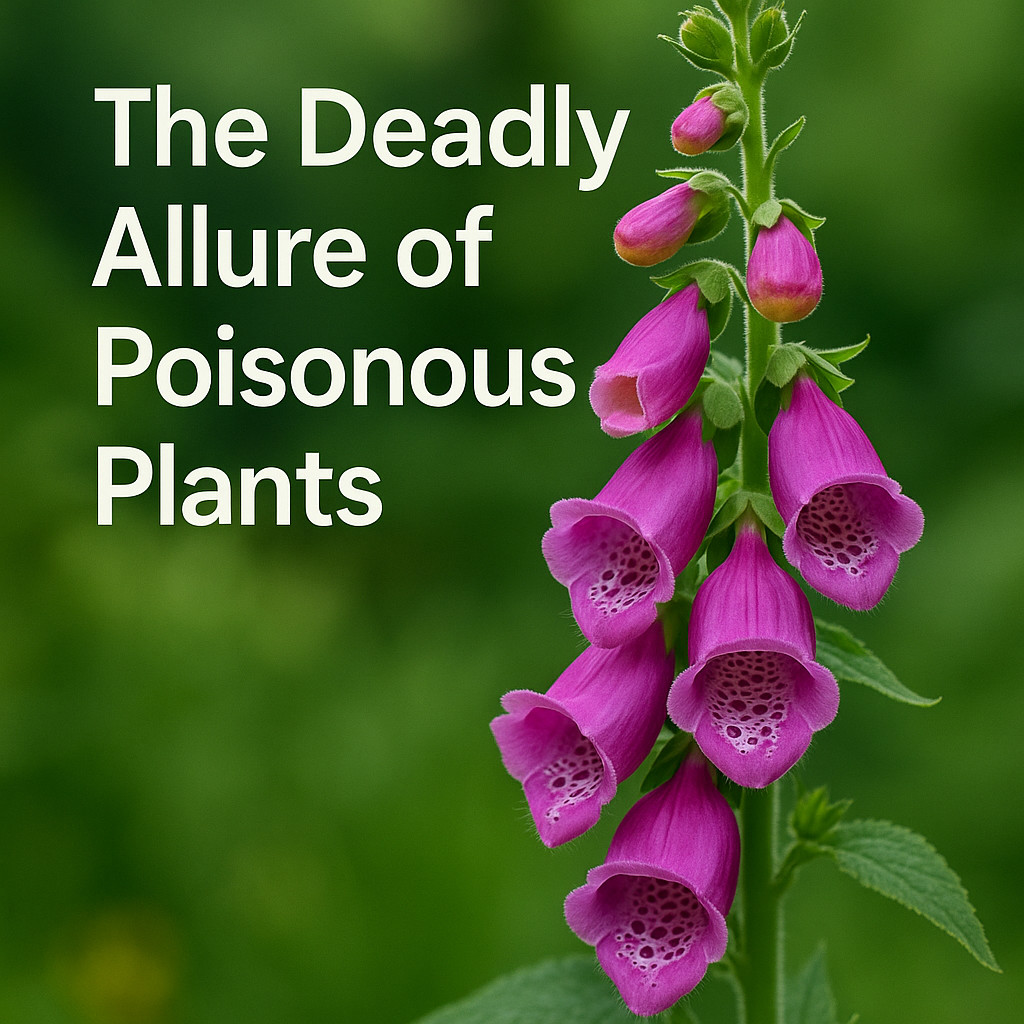

From the deceptively delicate Oleander to the sinister Deadly Nightshade, poisonous plants wield a dangerous charm. These botanical assassins have shaped human history—used as weapons, medicines, and even political tools. Yet, despite their lethal reputations, many thrive in backyards and gardens worldwide.
This article reveals:
-
The most lethal plants on Earth (and why they’re so deadly)
-
How toxins work—from heart-stopping poisons to mind-altering hallucinogens
-
Shocking historical cases of plant-based murders and accidents
-
Why we’re still drawn to them—gardening tips and cultural fascinations
1. The World’s Deadliest Plants: A Rogues’ Gallery
A. The Cardiac Assassin: Oleander (Nerium oleander)
-
Toxin: Oleandrin (a cardiac glycoside)
-
Effects: Just one leaf can kill an adult by stopping the heart.
-
Irony: Commonly planted in schoolyards and highways for its beauty.
B. The Suicide Tree: Cerbera odollam
-
Toxin: Cerberin (disrupts heart rhythm)
-
Notorious for: Its use in undetectable murders in India.
C. The Philosopher’s Killer: Hemlock (Conium maculatum)
-
Toxin: Coniine (paralyzes muscles, including lungs)
-
Infamous for: Killing Socrates in 399 BCE.
2. How Plant Toxins Work: Nature’s Chemical Warfare
Poisonous plants deploy toxins in ingenious ways:
A. Neurotoxins (Attack the Nervous System)
-
Example: Belladonna (Atropa belladonna)
-
Contains atropine, causing hallucinations, coma, and death.
-
Used historically to dilate pupils for beauty—hence the name “belladonna” (beautiful lady).
-
B. Cytotoxins (Destroy Cells)
-
Example: Castor Bean (Ricinus communis)
-
Produces ricin, one of Earth’s deadliest substances—a pinch can kill.
-
Ironically, its oil (castor oil) is used medicinally.
-
C. Phototoxins (React with Sunlight)
-
Example: Giant Hogweed (Heracleum mantegazzianum)
-
Sap causes third-degree burns when exposed to sunlight.
-
3. Historical Poisonings: Plants That Changed History
A. The Murderous Queen: Cleopatra’s Experiments
-
Tested poisons (including henbane and aconite) on prisoners to find a painless suicide method.
B. The Medici Family’s Secret Weapon
-
Used aconite (a.k.a. “queen of poisons”) to eliminate rivals in Renaissance Italy.
C. Modern-Day Risks
-
2021 Case: A gardener died after pruning Oleander without gloves.
4. Why Are We Still Obsessed with Poisonous Plants?
A. Gardening’s Dark Side
Many toxic plants remain popular for their beauty:
✔ Foxglove (Digitalis) – Stunning but contains heart-stopping digoxin.
✔ Angel’s Trumpet (Brugmansia) – Fragrant yet causes violent hallucinations.
B. Cultural Fascination
-
Literature: Shakespeare’s plays feature hemlock, mandrake, and yew.
-
Pop Culture: Breaking Bad used ricin as a plot device.
C. Medicinal Paradox
Many poisons are life-saving in tiny doses:
-
Digitalis → Heart medication.
-
Taxol (from Yew trees) → Chemotherapy drug.
5. Safety Guide: How to Handle Poisonous Plants
A. Identification Tips
-
Learn local toxic plants (e.g., water hemlock mimics edible parsley).
-
Use apps like iNaturalist to verify species.
B. Protective Measures
✔ Wear gloves when handling suspicious plants.
✔ Teach children never to eat wild berries.
✔ Keep pets away from lilies, sago palms, and autumn crocus.
6. The Future of Poisonous Plants: Research & Uses
Scientists are exploring:
-
New medicines from plant toxins (e.g., snakeroot for hypertension).
-
Eco-friendly pesticides derived from nicotine-like alkaloids.
-
Cancer treatments using mayapple compounds (podophyllotoxin).
Conclusion: Respect the Killers in Your Garden
Poisonous plants remind us that nature is both beautiful and brutal. By understanding their dangers—and their benefits—we can coexist safely with these deadly wonders.


Leave a Comment