
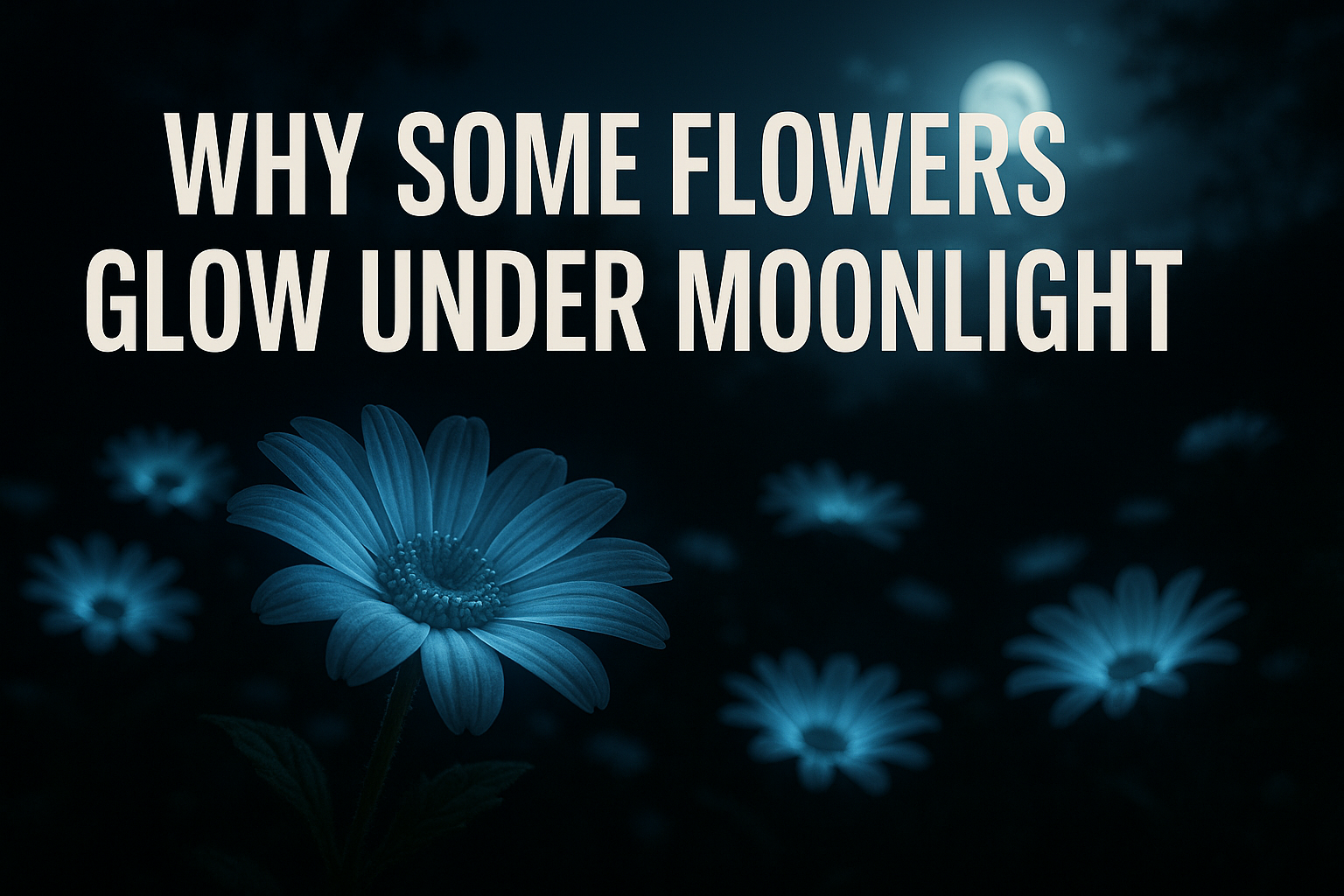

When the sun sets, certain flowers reveal a hidden superpower—they glow under moonlight. This mesmerizing phenomenon isn’t magic; it’s a sophisticated survival strategy perfected by evolution. From bioluminescent fungi to moonlit petals, nature’s glow-in-the-dark adaptations are as fascinating as they are beautiful.
In this article, you’ll discover:
-
The science behind floral luminescence (it’s not what you think!)
-
Which flowers “glow” and why (rare species & common tricks)
-
How moonlight influences flower behavior (pollination after dark)
-
Surprising ways humans are mimicking this glow (bio-inspired tech)
1. The Myth vs. Reality of Glowing Flowers
Myth: Some flowers emit their own light like fireflies.
Truth: Most don’t produce light—they reflect and amplify moonlight using specialized structures.
How It Works:
-
Iridescent petals – Some flowers have ultra-thin, layered cells that refract light (e.g., Silk floss tree).
-
Waxy coatings – A glossy surface (like Evening primrose) bounces back moonlight.
-
UV patterns – Flowers like Moonflower reflect ultraviolet light, visible to nocturnal pollinators.
Exception: A few rare plants (e.g., Mycena lux-coeli mushrooms) truly bioluminesce due to chemical reactions.
2. Moonlight Pollination: The Night Shift of Nature
About 30% of flowering plants rely on nocturnal pollinators (moths, bats, beetles). To attract them, some flowers “glow” strategically.
Key Adaptations for Night Pollinators:
✔ Pale or white petals – Maximize moonlight reflection (e.g., Tobacco flower, Angel’s trumpet).
✔ Strong nighttime fragrance – Guides pollinators when visibility is low.
✔ Delayed blooming – Flowers like Queen of the Night open only after sunset.
Fun Fact: The Datura wrightii flower’s glow is so effective that hawkmoths prefer it over day-blooming competitors.
3. The Role of Ultraviolet (UV) “Bullseyes”
Many flowers have hidden UV patterns (invisible to humans but glowing to insects). Under moonlight, these act like landing strips for moths.
Examples:
-
Evening primrose – UV-reflecting nectar guides.
-
Ghost orchid – Almost invisible by day, but its UV glow attracts giant sphinx moths at night.
4. True Bioluminescent Flowers: The Rare Exceptions
While most glowing flowers reflect light, a handful produce their own via bioluminescence:
1. Mycena lux-coeli (Japan)
-
These mushrooms emit ethereal blue-green light to attract spore-spreading insects.
2. Photorhabdus luminescens (Symbiotic Bacteria)
-
Infects some plants, causing roots to glow (used in bioengineering research).
Why So Rare?
Bioluminescence costs energy—reflecting moonlight is far more efficient for plants.
5. Human Uses: From Gardens to Glowing Roads
Scientists and artists are harnessing these natural tricks for:
✔ Glow-in-the-dark crops – UV-enhanced flowers to boost nighttime pollination.
✔ Eco-friendly lighting – Streets painted with luminous plant pigments.
✔ Medical imaging – Bioluminescent genes used in cancer research.
Real-World Example:
A 2023 study modified Arabidopsis plants to emit dim light using fungal bioluminescence genes.
6. How to Spot (or Grow) “Glowing” Flowers
Want to see this phenomenon yourself? Try:
-
Planting moon gardens (white/light-colored flowers like Moonflower, Nicotiana).
-
Using a UV flashlight to reveal hidden floral patterns at night.
-
Visiting bioluminescent bays (e.g., Puerto Rico’s Mosquito Bay) for natural glow effects.
Conclusion: Why This Glow Matters
Flowers that shine in moonlight aren’t just pretty—they’re masterpieces of evolutionary engineering. By studying them, we unlock:
-
Better crop pollination in a changing climate.
-
Sustainable lighting solutions.
-
Deeper respect for nature’s ingenuity.
Next time you see petals glimmering at night, remember: you’re witnessing a 100-million-year-old survival strategy in action.

Leave a Comment